Tipy
Teak vs aluminium: how to choose garden furniture to suit life on your terrace
Teak or aluminium? Compare appearance, maintenance, handling, and comfort to choose garden furniture for dining, relaxation, and poolside terraces.
Author: Zuzana Krajčírová, founder of Luxco Living
Published
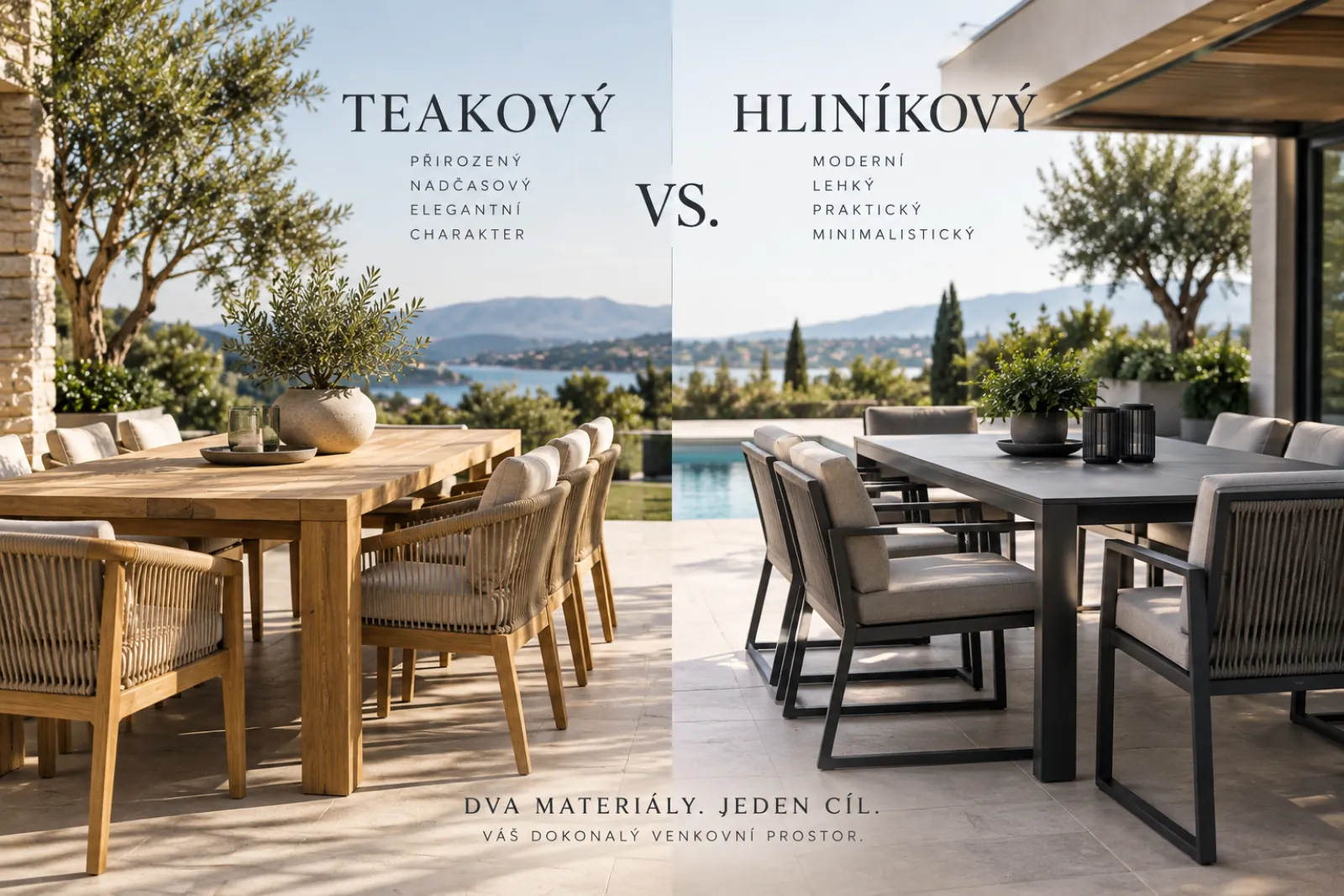
Teak vs aluminium: which material is better for you?
Choose teak if you appreciate the natural grain of wood and embrace its gradual transformation; opt for aluminium if you are looking for generally simpler maintenance and a lighter frame for easier handling. However, neither material automatically guarantees comfort, stability, or long durability. What matters most is the specific design of the furniture, where it is placed, and how you will use your terrace.
You will notice the difference most during everyday life. A family dining outdoors every evening will have different needs than a couple seeking a quiet spot to unwind, or a terrace owner who frequently rearranges their seating. The material should serve these habits, not dictate how you must live on your terrace.
Before browsing through the options, clarify three things: whether the furniture will largely remain in one place, how much care you want to give it, and whether you are comfortable with the natural ageing of the surface. Only then should you compare shapes, colours, and individual sets. In the garden furniture category, you will then be choosing based on real needs, rather than just the first photograph.
It is also important to distinguish between the frame, the tabletop, and the upholstery. Calling something an aluminium sofa refers primarily to its structure, not automatically to how quickly its cushions dry. Similarly, a teak detail does not necessarily mean the entire product is made of the same wood.
Clear comparison: appearance, maintenance, and everyday use
The following table summarises the general differences between the materials. Use it as a guide for your initial selection, not as a technical datasheet for a specific product. Actual weight, cleaning methods, and conditions for outdoor use must always be verified for the chosen model.
| Criterion | Teak | Aluminium |
|---|---|---|
| Visual character | Natural grain, variations between individual pieces | Appearance defined by the structural silhouette and surface finish |
| Surface transformation | Can gradually develop a silver-grey patina outdoors | Does not develop a timber patina; appearance depends on the condition of the finish |
| Routine care | Cleaning and optional treatment depending on the desired look | Typically cleaning alongside checks of the surface and joints |
| Moving around | Solid wood construction can be heavier to handle | Often a lighter structure; the total product weight is decisive |
| Main advantage | Distinctive natural appearance and the option to embrace patina | Practical handling and generally less demanding care |
| Main limitation | Preserving the original tone requires dedicated care | The surface finish must be protected from damage |
| Comfort | Depends on ergonomics and upholstery, not just on the wood | Depends on ergonomics and upholstery, not just on the metal |
What the table cannot tell you
The material alone will not reveal whether it is easy to stand up from a sofa or whether dining chairs will slide comfortably under the table. That is determined by proportions, leg placement, armrest height, and the style of the upholstery. Two products with the same frame can therefore behave very differently in day-to-day use.
Approach durability with the same care. Without knowing the joints, surface finish, environment, and maintenance, it is impossible to declare a universal winner or promise a specific number of years. When comparing, separate the characteristics of the raw material from the qualities of the complete product. The guide covers, fillings, and frames: how to read garden furniture specifications will help.
A practical approach is simple: select two or three models with a similar purpose and compare them across the same parameters. Comparing a lightweight side table with a substantial dining table purely by material would lead to distorted conclusions.
Teak: natural character that evolves over time
Teak gives a terrace distinctive texture without needing bold colours. Its grain works wonderfully as a counterbalance to smooth architectural surfaces. Alongside a simple façade or understated paving, wood can soften the space; in a naturally styled exterior, it will harmonise seamlessly with the overall character.
When choosing, however, do not judge only by how a new piece looks. Teak exposed to outdoor conditions gradually shifts in tone and can turn grey. This transformation is not in itself evidence of damage. However, it is an essential consideration for anyone wishing to preserve the exact colour they bought over the long term.
Advantages and disadvantages of teak
The advantage lies in its unique grain and the option to let the wood naturally develop a patina. At the same time, teak does not have to feel rustic: the character of the furniture is also defined by its shape and craftsmanship. The limitation is the need to allow for surface changes and for appropriate care if your goal is to maintain the warmer original tone.
With solid pieces, also consider handling. If you will be moving the furniture every time you clean, pay attention to the weight and whether it offers a secure grip. For a permanent seating area, this question may matter less than for a terrace whose layout changes regularly.
A practical example: teak as the centrepiece of the dining area
The Basta designer teak dining table features a solid tabletop crafted from four wide teak planks, subtly rounded edges, and tapered legs. It unites handcrafted artistry with innovative techniques. If you want timber to take centre stage in your outdoor dining area, this approach represents an inspiring direction.
For seating where a wooden character is to run across multiple pieces, you can also start with teak garden sets. However, always assess the entire set, including the cushions and the space around it.
Aluminium: a practical choice, but not maintenance-free furniture
An aluminium frame makes sense particularly where you appreciate easier handling and do not want to deal with wood care. At the same time, it does not have to mean an austere look. The overall impression can be altered by the frame's shape, its shade, and the volume of upholstery; the material itself does not dictate whether the terrace will feel cosy.
Beware the shortcut of assuming every aluminium product is lightweight as a whole. The resulting weight is influenced by the size, structural design, and other furniture components. When choosing, therefore, check the actual figures and do not rely solely on the name of the material.
Advantages and disadvantages of aluminium
The main advantage tends to be simple routine care and the favourable weight of the frame. A limitation can be the sensitivity of a particular surface finish to mechanical damage. Therefore, do not drag furniture across the floor and do not clean it using abrasive methods without the manufacturer's express recommendation.
Low weight is not exclusively an advantage under all circumstances. On an open, windy terrace, stability and safe positioning need to be assessed separately. Neither a heavier nor a lighter piece is automatically more suitable; its proportions and the local conditions are the deciding factors.
Two examples of different ways of using it
FLOW U – aluminium side table for the terrace offers a compact spot for a cup, a book, or a phone. Its aluminium frame is lightweight for easy moving and designed for outdoor conditions. It is therefore worth considering when you need a resting surface right where you are relaxing.
EVORA garden aluminium set belongs to the You Create modular programme and follows the SUNS Portofino design language. According to the product documentation, quick-drying upholstery and durable materials allow for year-round outdoor placement. However, these properties cannot be automatically assumed for all aluminium lounge sets.
Choose your material based on what you do on the terrace
A dining table, a sofa, and a sun lounger have different tasks. Therefore, it is not necessary to insist on a single material for the entire space. For each part of the terrace, define the primary requirement: comfortable dining, relaxation, easy moving, or visual continuity with the house.
Outdoor dining area: comfortable seating first
At the table, check leg position, knee room, and clearance when chairs are pulled out. The SUNS Pemba aluminium garden dining table is geared towards spacious outdoor dining and a modern aesthetic. According to the product description, the absence of a central leg provides more space for seating and movement.
In practical terms, this means that alongside the appearance of the tabletop, it makes sense to examine its base. On a family terrace, satisfaction can come down precisely to whether people can comfortably take their seats and leave the table without having to awkwardly negotiate occupied spots.
Sofa: the frame is only part of the comfort
With a garden sofa, try out the back support, seat height, and ease of standing up. Look into the upholstery cover and filling separately from the frame. If you tend to spend time on the terrace chatting rather than lying back and relaxing, back support may be more important to you than the seating depth itself.
Sun lounger by the pool or in a relaxation zone
The FLOW Elan Teak Graumel Chalk luxury garden lounger blends organic lines with natural timber. The product documentation states quick-drying foam and durable outdoor materials, as well as suitability for terraces, poolside, and wellness areas.
When planning such a space, verify not only the sun lounger itself, but also clear access to it and room to adjust its position. Near a pool, moreover, do not take a general outdoor specification as an automatic confirmation of resistance to any pool chemicals.
Caring for teak and aluminium: different surfaces, common principles
Plan maintenance according to the material of each component of the product. The frame, tabletop, joints, and upholstery may each require a different approach. The specific model's instructions always take priority; a one-size-fits-all solution can damage a surface that appears durable at first glance.
With teak, choose your desired look
First, decide whether you want to embrace the natural patina or strive to maintain a shade closer to the original. Check the recommended care method accordingly. Oiling is not automatically mandatory for every teak product, and any product used must suit its specific surface.
Remove everyday dirt gently and do not leave stains to sit unnecessarily long. Before resorting to intensive cleaning or sanding, find out the manufacturer's recommendations. Natural silvering is not the same as ingrained grime, and each situation can require a different approach.
With aluminium, protect the surface finish
For routine care, use gentle tools and cleaning agents approved by the manufacturer. Avoid wire scouring pads and experimenting with aggressive chemicals. Routinely check the joints and areas that come into contact with other items during handling.
Covering does not replace drying
Clean furniture and let it dry thoroughly before covering. Choose a cover tailored to the actual shape and size of the set, and respect the requirements for ventilation. Even during longer periods of non-use, check that moisture is not becoming trapped underneath.
When selecting protective covers, therefore, do not merely consider coverage from above. Fastening, airflow, and the proper handling of cushions are vital. You can find a more detailed guide in the article on how to properly cover garden furniture.
How to combine teak and aluminium in a single space
Combining both materials is suitable if you want to marry a natural feel with easy maintenance for selected pieces of furniture. It does not have to be a single hybrid product. A wooden dining table and an aluminium side table can work together in one composition if they are tied together by colour, proportion, or similarly understated shapes.
It helps to designate one dominant material and use the second as an accent. If the terrace has prominent timber decking, evaluate any additional wood also by its future patina. Conversely, against smooth, neutrally coloured surfaces, teak can create a natural focal point for the entire composition.
An example for an urban terrace: keep the dining area in a dedicated part of the space and use a more mobile side table to suit where you are currently sitting. An example for a larger terrace: connect the dining and relaxation zones with a similar upholstery tone, even if their frame materials differ.
When evaluating samples, bear the light in mind as well. A surface will look different in direct sunlight compared to a shaded section of the terrace. Therefore, do not choose based purely on a close-up on a screen; what matters is how the material sits alongside the flooring and the facade, and how it will appear when viewed from indoors.
Decision-making steps before ordering furniture
Start with a simple floor plan of the space. Note down the entrance onto the terrace, walkways, and the areas where the furniture will actually be used. Do not forget that a chair also needs space when pulled out, and you must occasionally walk around a sofa for cleaning. The exact dimensions of the set on their own are not enough.
Then, write down your order of priorities. If effortless handling comes first, verify the weight of the complete product. If a natural look is key, count on teak changing over time. If minimal maintenance is primary, evaluate the upholstery as well: a low-maintenance frame does not necessarily mean an equally low-maintenance sofa.
For your shortlisted models, verify their outdoor rating, recommended cleaning methods, and storage conditions for individual components. Also inquire about servicing options or the availability of spare parts, but do not assume their existence without confirmation. When assessing a specific product offering, substantiated data is what counts, not the general reputation of a material.
To prepare your selection, use the guide on what to prepare before choosing terrace furniture. Photographs of the space, dimensions, and a description of a typical day on your terrace will help narrow down the Luxco Living range far more effectively than merely asking for teak or aluminium.
The final decision does not have to be a compromise. Teak can serve as the primary visual feature, whilst aluminium delivers where you appreciate practicality. The right choice is the one that stands up to everyday use and whose care matches the time you wish to devote to it.
Featured products


Frequently asked questions
Is teak or aluminium garden furniture better?
Teak is well suited to those who appreciate natural grain and the evolving appearance of wood. Aluminium is usually ideal when the priority is simpler care and easier handling. However, comfort and durability should always be judged by the specific construction, upholstery, and conditions of use.
Does teak furniture need to be oiled regularly?
There is no universal requirement to oil every teak product. It depends on its surface finish, the manufacturer's recommendations, and your desired appearance. If you wish to preserve the original shade, check the appropriate method; if you embrace the patina, care can be simpler.
Does greying teak mean the wood is damaged?
A silver-grey patina on its own is not evidence of damage. It is a natural transformation of teak's appearance in an outdoor environment. However, the condition of joints, stability, and any other surface changes must be checked regardless of colour.
Is aluminium garden furniture maintenance-free?
It is not. It generally requires less care than wood whose original tone you wish to preserve, but it still requires cleaning and inspections of both joints and surfaces. The correct approach is governed by the specific surface finish and the manufacturer's instructions.
Can both teak and aluminium furniture be left outside all year round?
For some models, yes, but the explicit specification of the particular product is decisive. Year-round outdoor use cannot be inferred purely from the frame material. Pay particular attention to the instructions for cushions, covers, sheltering, and winter care.
Which material is better suited for poolside use?
Both can be suitable provided the specific product matches the given environment. Alongside construction, consider upholstery, drying times, and recommended care after contact with swimming pool water. An outdoor rating alone does not confirm unlimited resistance to pool chemicals.
Can you combine a teak table with aluminium furniture?
Yes. For a cohesive look, connect individual pieces through similar colours or silhouettes. When pairing a table and seating, also check the height, clearance under the tabletop, and whether the armrests can slide underneath. Material matching is less important than comfortable use.