Tipy
Caring for teak furniture in autumn and winter: from cleaning to proper covering
How to clean, dry, and winterise teak garden furniture. A practical guide, storage comparison, and tips for preventing moisture and mould under covers.
Author: Zuzana Krajčírová, founder of Luxco Living
Published
How to prepare teak furniture for autumn and winter
In autumn, gently clean teak furniture, allow it to dry thoroughly, check its joints, and move it to a dry, ventilated location. If it remains outdoors and the manufacturer permits such use, ensure water drainage, a suitable cover, and continuous ventilation. Autumn and winter care for teak furniture does not rely on automatic oiling: cleanliness, limiting prolonged moisture, and adhering to the specific model's instructions are essential.
Teak naturally withstands outdoor conditions, but it is not maintenance-free. The greatest difficulties are often caused not by the cold itself, but by a combination of dirt, standing water, and enclosed spaces lacking airflow. A tightly wrapped table may therefore be no better protected than furniture on a well-ventilated, covered terrace.
For furniture from the Luxco Living range, distinguish between caring for the wood, the frame, and the textile elements. Instructions for teak cannot be automatically applied to the entire set. When choosing from the teak garden sets category, also consider where the set will stand during winter and how easily you can access all its parts.
Divide your autumn work into two stages: first, cleaning and inspection, and only after thorough drying, any treatment and storage. This avoids the common mistake of having to cover the furniture that same evening while it is still damp.
First, distinguish between natural patina, dirt, and damage
Inspect the furniture in daylight before cleaning. Look not only at top surfaces, but also at the undersides of tabletops, areas around joints, and sections close to the ground. That is precisely where moisture can linger unseen during everyday use. Photograph any surface changes to help you see later if they are progressing.
The same procedure applies to dining tables and side tables alike. For example, the Basta Designer Teak Dining Table features a solid tabletop made of four wide teak planks, gently rounded edges, and tapering legs. During the autumn inspection of a similarly designed table, it pays to examine individual surfaces and accessible joints, not just the dining surface.
A silver-grey tone does not in itself indicate a defect
Untreated teak outdoors gradually acquires a grey patina. This is a natural change in surface appearance, not automatic proof of compromised strength. If you are happy with the patinated look, there is no need to remove it simply because winter is approaching. Even so, cleaning and monitoring the conditions where the furniture stands remain essential.
Which changes require attention
Localised dark spots, films, or a musty odour can be linked to contamination and prolonged moisture; however, colour alone is not enough to determine the cause. In the case of deeper cracks, wobbling, or wood softening, discontinue using the affected part and seek an assessment. Neither oil nor wax serves as a repair for a load-bearing joint or structural crack.
Autumn cleaning: gently, in stages, and with time to dry
Choose a frost-free period when you can leave the furniture in an airy location protected from further rain after washing. Cold, damp weather slows drying, so do not rely on a fixed number of hours. A dry top surface does not mean the underside or the areas around the joints have dried out too.
First, remove loose dirt with a soft brush or cloth. Then proceed according to the furniture manufacturer's instructions. If standard wet cleaning is permitted, use a gentle cleaning solution suitable for the surface, work without excessive pressure, and follow the direction of the wood grain. Always test a new method on an inconspicuous spot.
Remove cleaning solution residues as specified in the instructions and do not allow them to dry on the surface. Avoid soaking the wood unnecessarily. Neither pressure washing nor harsh scrubbing is an appropriate shortcut: they can damage the surface and accentuate unevenness. A stronger concentration of cleaning product does not automatically mean a better result either.
Treat wood and upholstery separately
Only detach removable textile parts as permitted by the design and instructions. Do not apply procedures meant for teak to covers, fillings, or metal components. With non-removable upholstery, take care to prevent excess water from penetrating it while washing the wood.
This distinction is also important for the Flow Lio Graumel Chalk Luxury Sun Lounger with Teak Frame. Its backrest can be adjusted to three positions or laid completely flat. However, the reclining feature itself says nothing about winter storage or laundering methods; always address these points according to the instructions for the specific design.
Is it necessary to oil or sand teak before winter?
No, neither oiling nor sanding is a mandatory part of every overwintering routine. The original finish, the condition of the furniture, and recommended maintenance are what matter. A blanket autumn application may be unnecessary or incompatible with what is already on the surface. Therefore, first check whether the wood is untreated or has a manufacturer-applied finish.
Treatment aimed at preserving colour serves a different purpose than cleaning and proper winter positioning. It does not replace drying out, will not prevent condensation under an improperly fitted cover, and will not repair damaged framework. If you are unsure of previous treatments, do not apply another product blindly.
Natural patina: fewer interventions, evolving appearance
The advantage of natural ageing is a reduced need for colour-maintenance treatments and a look that complements the character of outdoor timber. A potential drawback is an uneven tone, particularly if part of the furniture sits under cover while another part is exposed to the elements. The difference is often noticeable even after moving objects that have long covered the same spot.
Preserved colour: more regular care and suitable conditions
If you wish to maintain the original colour, expect recurring care according to the recommended regimen. The advantage is greater control over the appearance; the downside is the time required and the need to observe application and drying conditions. Do not apply surface treatments to damp wood or immediately before covering.
Only consider sanding for a specific problem and after confirming the appropriate method. It can strip the original finish, alter the appearance of edges, or create unevenly coloured patches. Therefore, always tackle regular autumn dirt with gentle cleaning first, rather than automatically sanding down the entire set.
Where teak furniture overwinters best: comparing the options
The most suitable spot reduces direct soaking, allows airflow, and remains accessible for inspection. It does not have to be a heated room. A dry, ventilated storage space is usually more practical than a damp garage where water condenses on surfaces. Also avoid being too close to an intensive heat source.
For large teak tables, it is advisable to think through the winter regime before positioning them on the patio. Moving should be safe for both the furniture and its surroundings: lift the piece by the parts intended for handling, do not drag it across the floor, and carry out any disassembly strictly according to the instructions.
| Location | Main benefits | Disadvantages and risks | What to check |
|---|---|---|---|
| Dry, ventilated storage space | Protection from direct rain and snow | Need for space and safe transport | Humidity, ventilation, and distance from heat sources |
| Covered terrace or pergola | Furniture remains close to where it is used | Driving rain, drifting snow, and condensation | Actual reach of the roof and water runoff |
| Outdoor area with a suitable cover | No need to move bulky pieces | Moisture under the cover and wind loads | Permitted outdoor use, secure fastening, and ventilation |
| Outdoor area without a cover | Direct airflow around the furniture | Full exposure to the elements and more frequent soiling | Explicit manufacturer instructions and ground surface condition |
A protective cover must allow for water runoff and ventilation
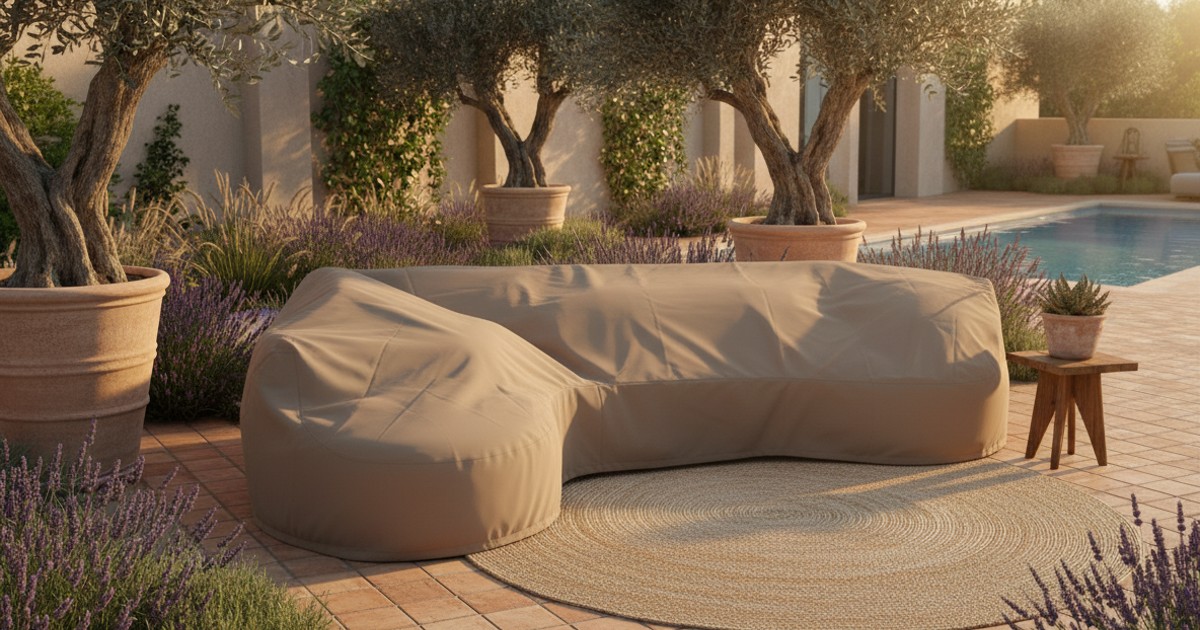
A cover helps reduce soiling and the direct impact of precipitation, but it does not automatically create a dry environment. Moisture can get underneath it from the air, from insufficiently dried furniture, or from a wet ground surface. When choosing protective covers, therefore, compare the declared properties, suitability for the specific layout, and the method of fastening.
The cover must match the actual shape of the set. A cover that is too loose can shift in the wind and create puddles; one that is too tight can be stressed along the edges. Maintain the recommended ventilation gaps and do not leave the bottom edge resting in standing water. Fasten the cover only in the manner specified by the manufacturer.
On horizontal surfaces, check that water pockets do not form. If the covering system allows for a slope to be created, follow its instructions and do not use makeshift solutions that would exert point-pressure on the wood or upholstery. Even the breathability of the material is no guarantee that condensation will never occur under the cover.
Practical principles are also summarised in the guide on how to cover garden furniture properly. The aim is not to seal the furniture hermetically, but to limit wetting whilst maintaining the ability to release moisture.
What to do when you discover moisture under the cover
During suitable weather, remove the cover and allow both the furniture and the inside of the cover to dry separately. Establish whether water is coming from above, from the floor, or condensing inside. Merely replacing the cover will not solve the problem. The article on how to prevent mould under garden furniture covers explores the causes in greater detail.
Practical examples: dining patio, sofa, and side table
Adapt the winter regime to how you use the terrace. A different approach makes sense for a space closed until spring compared to one where you sit outside regularly even during autumn. The important thing is to choose a solution you can inspect repeatedly, not merely prepare as a one-off.
Dining area under a pergola
A table under a roof may be protected from above, but its legs and edges are still hit by driving rain. Before winter, therefore, monitor the terrace during rainfall: you will find out where water actually lands and where puddles remain. For pergolas, evaluate the specific design and winter guidelines, not just the impression of an enclosed space. Do not push furniture into a corner where it might rain less, but where air hardly circulates.
A teak set used during winter as well
The product SUNS TERMOLI II Teak Set – Natural is designated for year-round outdoor use. However, that is not the same as maintenance-free operation. After use, inspect the condition of surfaces and make sure they are dry before covering. The specific handling of individual parts of the set continues to follow the relevant instructions.
If you only use the seating area occasionally, plan for easy removal and refitting of the cover. You do not need to wash the furniture thoroughly every time; continuously remove fresh dirt and perform a major clean according to actual condition. A complementary procedure is provided in the guide on winterising garden furniture.
A smaller side table moved to a sheltered space
For a smaller piece, moving it for winter can be more practical than covering it separately. The Lido teak garden side table can also be combined with other SUNS furniture, and its appearance showcases the unique grain of teak. If you store a similar table, clean and dry it first. Do not stack other furniture onto it unless it is designed for such a load.
Winter inspections and the spring return to use
Care does not end with winterising. Carry out an inspection after strong winds, heavy precipitation, a thaw, or when moisture is suspected. Check the fastening of the cover, water pooling on its surface, the floor beneath the furniture, and any potential odour. A fixed interval is not universal: an open terrace requires different attention than a dry store room.
If you discover a suspicious film or coating, do not clean it dry in an enclosed room. Ensure proper ventilation and select a method approved for the given surface. Do not rely on multi-purpose home mixtures, nor combine different cleaning agents. In the event of a more extensive or recurring problem, request a professional assessment and adjust the storage conditions at the same time.
In spring, remove the cover, inspect the wood and frame, and verify the stability of the furniture. Check accessible joints according to the instructions; overtightening can be just as unsuitable as leaving slack. Only then replace the textile parts and begin using the set normally.
The most reliable plan is simple: clean and dry in autumn, maintain suitable conditions throughout winter, and verify functionality in spring. Deal with colour changes separately from structural issues. That way you will preserve the natural character of the teak without subjecting the furniture to unnecessary interventions.
Featured products


Frequently asked questions
Can teak garden furniture stay outdoors over winter?
Yes, provided the instructions for the specific model allow it. However, the teak alone does not indicate the durability of all components. Ensure proper water drainage, suitable ventilation, and regular checks; verify the care regime for cushions and other materials separately.
Do I always need to oil teak before winter?
No. The surface finish and manufacturer recommendations are decisive. Oiling is no substitute for cleaning or drying and is not automatically required for overwintering. If you embrace the natural grey patina, there is no need to intervene solely because of a change in tone.
How long should teak dry after cleaning?
There is no universal timeframe. It depends on the weather, airflow, construction, and the amount of water. Before covering, also check the undersides and the areas around joints. If moisture persists, do not place the furniture under a cover yet.
Is grey teak damaged?
A silver-grey patina is typically a natural result of outdoor exposure. In itself, it does not signify structural damage. Localised coatings, softened wood, pronounced cracks, or unstable joints warrant closer attention instead.
Why does moisture appear even under a protective cover?
This can be caused by insufficiently dried furniture, condensation, moisture from the ground, or an improperly fitted cover. Even a breathable material cannot guarantee complete dryness. Check water runoff, ventilation gaps, and the condition of the cover's underside.
Is placing furniture under a pergola enough for overwintering?
Sometimes, but it depends on the level of protection and the requirements of the furniture. A pergola may not keep out driving rain, drifting snow, or condensation. A genuinely dry and ventilated position is what matters, not just the presence of a roof.
Can a crack in teak be repaired with oil?
No. Oil is not a structural repair material. For deeper cracks, loose joints, or wobbling, restrict use and seek an assessment. Minor surface changes must be distinguished from damage that affects safety.