Realizace
Luxury garden project: lounge, dining, and a place to relax
Luxury garden and terrace by Luxco Living: light-toned lounge seating, smaller tables, and a separate relaxation area. Project photographs and a well-thought-out division of space.
Author: Zuzana Krajčírová, founder of Luxco Living
Relaxation begins with zoning the space
A luxury garden can be perceived as an extension of the house, but its individual parts do not need to function identically. Social seating requires continuity between seats, dining requires a compatible table and chairs, and quieter relaxation needs its own dedicated spot. The purpose of a design is not to place as many sets as possible, but to determine which activities the outdoor space should support.
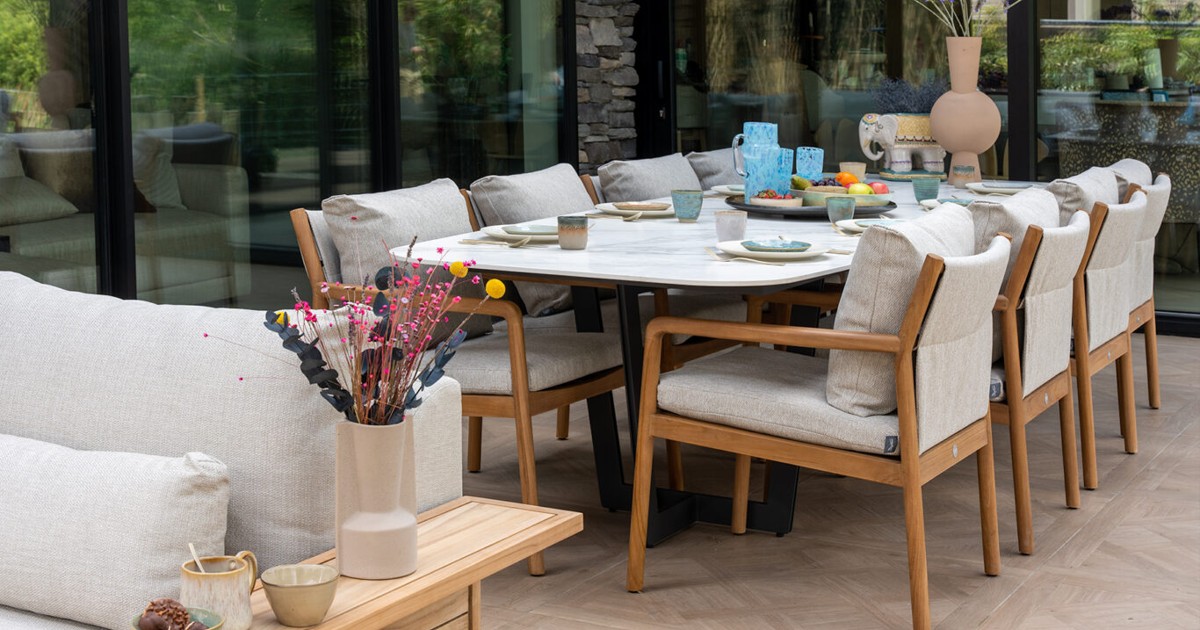
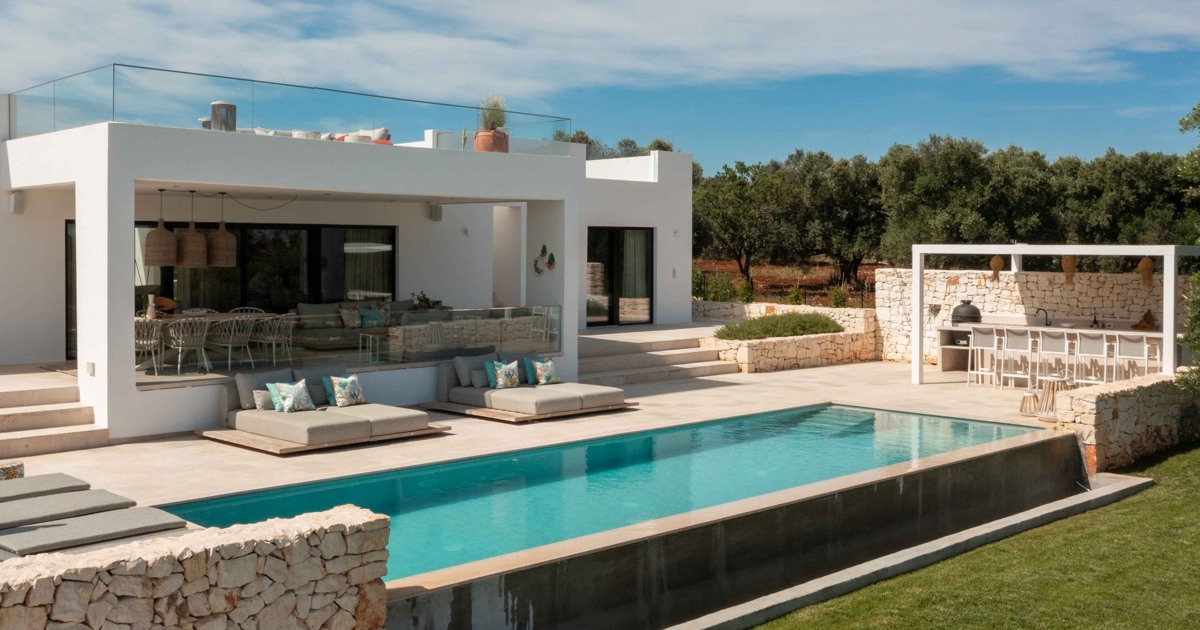
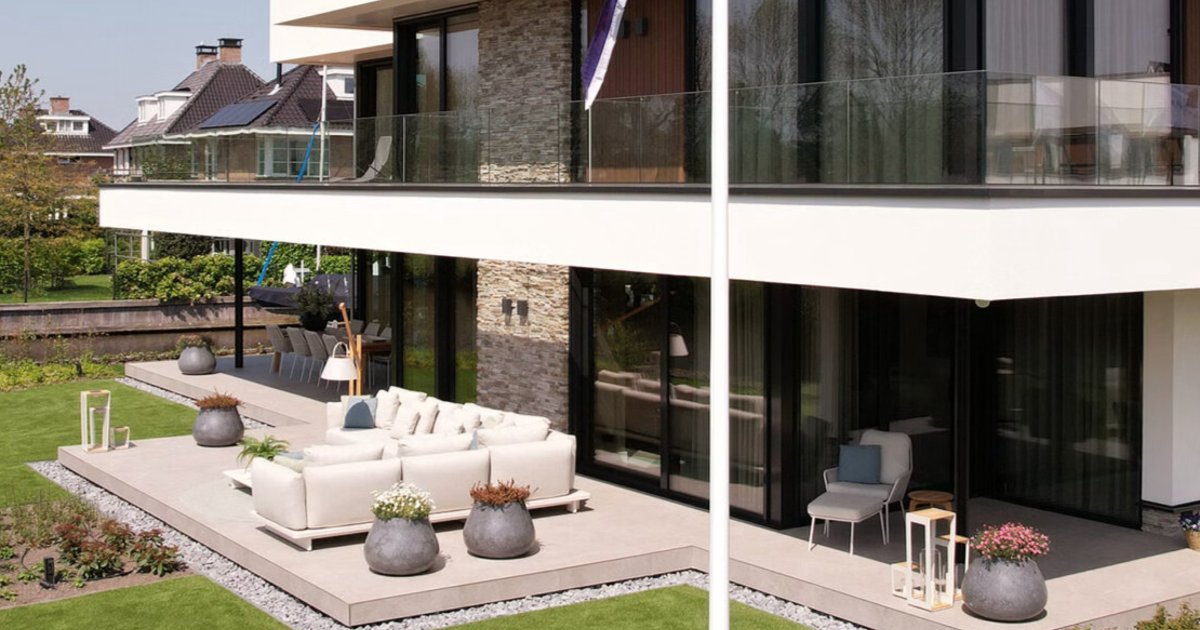
This Luxco Living project is based on three images featuring light-toned upholstery and different types of seating. The first two capture a terrace adjoining a building, while the third shows relaxation seating on a green lawn. The background material does not provide an address or the exact project composition, so we do not claim that all photographs belong to a single garden. We do not identify the individuals in the images, nor do we attribute statements to them.
A terrace lounge as an extension of the interior
The first shot is framed through open glass doors onto the terrace. Light-toned curved seating stands beside smaller tables, with another group of chairs following further back. The regular flooring pattern and dark railings create a frame against which the light upholstery stands out nicely.
The route from the house is essential: a clear passageway remains between the entrance and the furniture. When creating your own design, open the doors, mark out the set's dimensions, and walk the regular route carrying a tray. A photograph can inspire, but perspective does not guarantee the necessary walkway width. Always verify it by taking actual measurements and considering the conditions of the specific site.
Side tables complement relaxed seating
The second image zooms in on a light-toned curved sofa and two smaller tables with white tops and vertically slatted bases. The cushions adhere to a restrained palette of light and dark patterns. A drink or a book is within arm's reach of the seating without a large dining table dominating the space.
This is a lounge arrangement, not evidence of a specific low-dining system. We do not know the exact heights or models from the photograph. For another project, compare the height of the tabletop with the seat and check you can reach it without uncomfortably leaning forward. Choose luxury garden sofa sets according to their actual purpose, not merely their silhouette.
A separate spot for a change of posture
The third photograph shows light-toned upholstered seating with timber-look side frames and an adjoining curved area set against a green lawn. A colourful throw adds contrast, while the other elements remain neutral. The arrangement creates a different type of relaxation compared to chairs at a dining table.
Before choosing a similar solution, clarify whether you want to sit upright, read, or recline with your legs stretched out. Check the dimensions, seat height, and accessibility from both sides. The photograph does not confirm the specific frame material or filling type. For further comparison, you can look at garden loungers without attributing the photographed piece to another collection.
Low dining as an option, not a mandatory standard
The source concept includes low dining, meaning dining combined with more relaxed seating. It is one layout option, not a mandatory replacement for a conventional dining table. For some, it may be ideal for lingering, while others may prefer a more upright dining posture.
When choosing from the low dining category, check the relative heights of the table and seats, legroom, and how easy it is to stand up. Do not automatically treat a low coffee table alone as a dining table. The photographs in this article do not identify an exact low-dining set, which is why we do not derive specifications from them.
Garden layers do not have to mean more furniture
Dividing a space into a lounge, dining area, and quiet corner can also be achieved through seating orientation, connection to the house, or distinct tabletop surfaces. Each zone does not have to contain an entire standalone set. For a smaller space, a single, well-chosen grouping may work better than several zones separated by narrow pathways.
For your design, write down the primary activities, the number of users, and the times of day you use the garden. Include the movement of the sun and shading options. Consider outdoor furniture and shading together, but verify technical constraints for each product individually. For smaller-layout inspiration, explore our urban terrace project.
Materials, weather, and a maintenance plan
Teak, aluminium, and outdoor fabrics can be part of an outdoor solution, yet a generic material name is not enough to assess year-round use. The frame, cover, and filling each have their own limitations. Request care instructions, protection requirements, and details of the exact variant; a photograph does not confirm its technical durability.
We do not promise zero maintenance, fixed lifespans, or health benefits from spending time in the garden. A practical design also takes into account drying and storing textiles. Our guide to outdoor furniture covers, filling, and frames explains how to interpret these specifications. For winter preparation, consult our guide to winterising furniture.
Frequently asked questions about a luxury garden for relaxation
Does a garden have to have three separate zones? No, it does not. Activities and layout are what matters; sometimes a single, well-designed seating group can accommodate multiple needs.
Is low dining suitable for everyone? It is not a one-size-fits-all solution. Check the relative heights, dining posture, and ease of standing up based on the users' needs.
Can furniture materials be determined from photographs? Not the exact composition. Visual impression and documented specifications of a specific model are two different things.
What should you prepare for a design? Dimensions, photographs, doorways and walkways, orientation to the sun, number of users, and primary activities. Also note options for protection and off-season storage.
A garden as a usable part of the home
A tranquil outdoor space can arise from a few clear decisions: where people sit, where they eat, what stays clear, and how the furniture is maintained. Muted colours and shared proportions help unify the overall space, but true value for the household is determined by everyday use.
Luxco Living offers a free terrace design and personal consultation. Prepare your materials for selecting furniture and also take a look at our terrace project for everyday relaxation. Choose dimensions and specific models only after taking into account your space.