Tipy
Sustainable garden furniture materials: teak, aluminium, and recycled fibres
How to assess teak, aluminium, and recycled fibres in garden furniture? Compare provenance, maintenance, repairability, and documented properties of specific models.
Author: Zuzana Krajčírová, founder of Luxco Living
Published
Which garden furniture material is the most sustainable?
The most sustainable garden furniture cannot be identified solely by whether it is made from teak, aluminium, or recycled fibres. What matters is the documented origin of raw materials, manufacturing processes, maintenance and repair options, as well as how long a specific piece will genuinely serve you. Teak can offer long-lasting timber, aluminium provides a highly recyclable structural material, and recycled fibres make use of secondary raw materials. However, none of these options on its own guarantees a lower environmental footprint for the entire product.
For a terrace, it is therefore more practical to look for suitable furniture rather than a universally superior material. One arrangement makes sense under a covered porch, another in an open setting, and yet another in a poolside relaxation zone. When furniture aligns with your actual usage, comfort needs, and maintenance capabilities, the risk of prematurely replacing it decreases.
Across the Luxco Living range, this approach can be applied when selecting garden sofas, tables, chairs, and sun loungers. Start with the purpose of the space, and only then compare garden furniture by structure, finishes, and upholstery. After all, an appealing photograph will not reveal the origin of the timber, the fabric composition, or its cleaning requirements.
It is also essential to distinguish general material properties from data concerning a specific model. The recyclability of aluminium does not prove the use of recycled aluminium, and a natural wood appearance is no confirmation of responsible provenance. Likewise, a soft outdoor fabric does not necessarily contain recycled fibres. Sustainability begins with precise questions, not general impressions.
Teak: natural character, timber origin, and natural ageing
Teak is among the timber species traditionally associated with outdoor furniture thanks to its natural resilience. However, responsible selection relies not only on the species name, but also on its origin and product craftsmanship. For teak garden sets, make sure to review the specific description, structural details, and care instructions rather than just the generic collection label.
Advantages and disadvantages of teak in everyday use
An advantage is its natural grain and the ability to embrace weathering as part of the furniture's character. Teak exposed to the elements gradually acquires a silvery-grey patina. If you appreciate this patina, there is no need to preserve the original colour at all costs. The wood also works well outdoors to visually connect exterior and interior spaces.
A drawback for some owners is precisely this colour variability. Individual surfaces can age differently depending on sun exposure and shelter. Preserving the original shade usually requires dedicated care following manufacturer recommendations. Moreover, timber is not maintenance-free: dirt and prolonged moisture retention must be addressed even with durable hardwoods.
What can be verified for a specific table
The product Farzi Lux teak side table Ø55x41 cm lists SVLK-certified teak, stability, weather resistance, and a long service life in demanding outdoor conditions. This information is relevant to this specific product; it cannot automatically be applied to all teak models in the range.
Certification should always be interpreted according to its actual scope. It is not a substitute for assessing the furniture's entire lifecycle. Treat the term recycled wood with equal care: it means something different from newly processed teak. The distinction is explored in our guide on recycled teak wood and its origin.
Aluminium: easier handling is not the same as zero maintenance
Aluminium is appealing for garden furniture due to its low weight and recyclability. However, when assessing the environmental impact, one must distinguish between virgin and recycled raw materials. Producing primary aluminium is energy-intensive; using secondary materials can reduce this demand. Yet without manufacturer specifications, a particular frame cannot simply be labelled as made from recycled aluminium.
For the user, a practical advantage is often easier repositioning of furniture during cleaning or rearranging the terrace. Conversely, in open and windy locations, overall product stability must be considered. The material name alone reveals nothing about the weight of a specific piece, the quality of its joints, or its suitability for a given exposure.
For the SUNS Virenze bar stool – Teak/anthracite, the product specifications state lightweight and sturdy aluminium that withstands rain, sun, and temperature fluctuations without requiring demanding maintenance. The teak section provides natural grain and gradually develops a silver-grey patina. This is a specific example of combining both materials, not evidence of recycled raw material content.
A weak point of aluminium furniture can be the sensitivity of its surface finish to improper cleaning or mechanical damage. The exact procedure depends on the product's finish. Ongoing gentle washing is generally more sensible than tackling heavy build-ups later with harsh detergents.
When selecting an aluminium frame, do not ask only about weather resistance. Also inquire about joint cleaning, spare parts availability, and surface repair options. These practical details can be far more critical for long-term use than a generic claim of recyclability.
Recycled fibres: what must actually be stated in the description
Recycled fibres can utilise secondary raw materials instead of a portion of virgin inputs. From a responsible buying perspective, this is relevant information, but not an automatic guarantee of durability, easy cleaning, or subsequent recyclability. For outdoor upholstery, one must assess fabric composition, textile construction, and intended use at the same time.
For the products reviewed here, recycled fibre content is not confirmed in the available specifications. None of them can therefore be presented on this basis as furniture featuring upholstery made from recycled bottles. Claims regarding a brand's wider collection or another product line cannot be transposed onto a specific sofa or lounger.
Three distinct questions: cover, filling, and raw material origin
Before purchasing, clarify which part the recycling claim applies to and what the documented percentage is. The cover fabric and the inner filling are not the same material. Furthermore, a quick-dry foam label describes a functional characteristic, not a recycled origin. A blend of multiple fibres may offer different future recycling options compared to a mono-material textile.
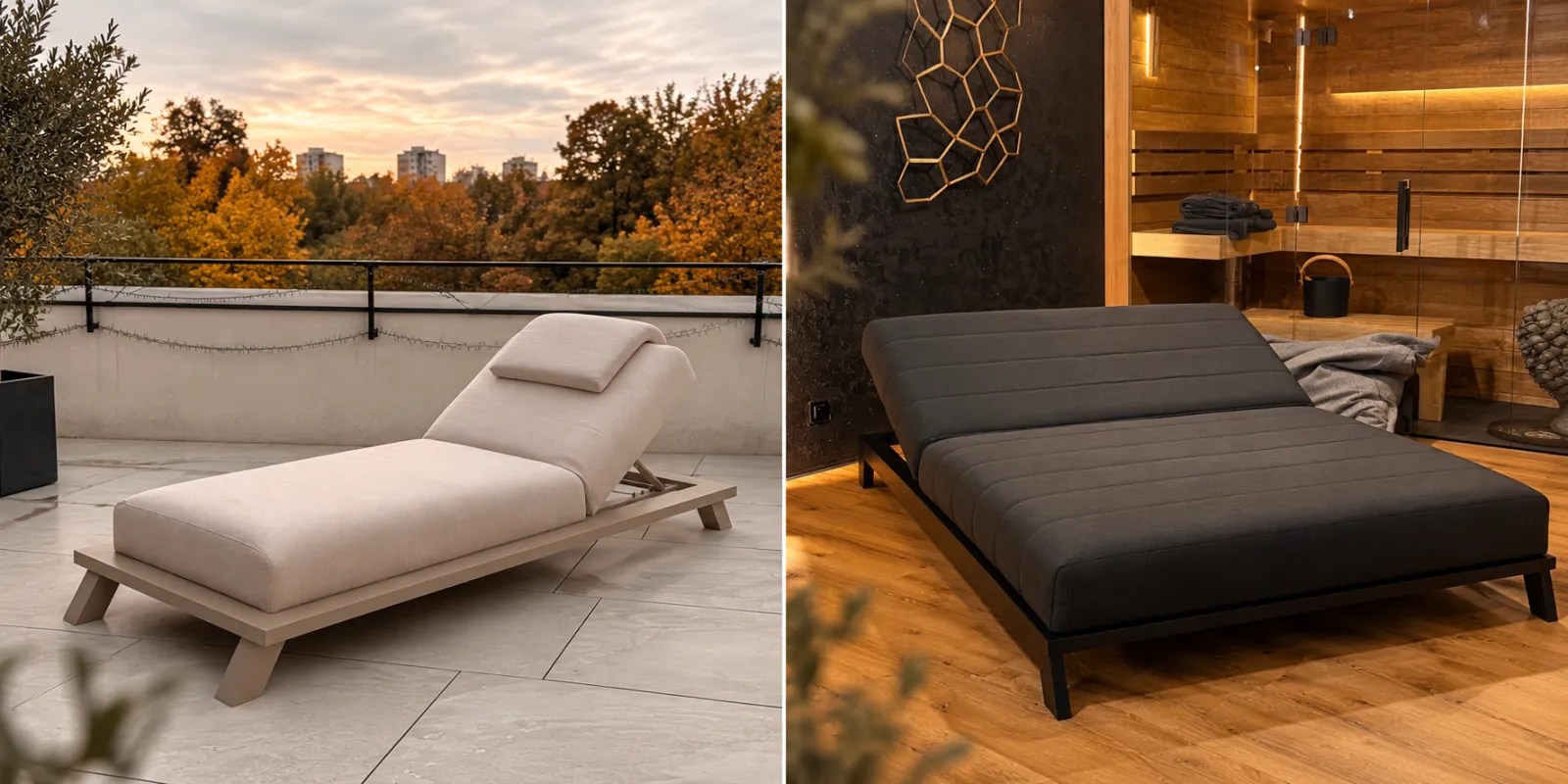
A practical example is the FLOW Elan Teak luxury sun lounger Graumel Chalk. Its documentation highlights organic lines, natural wood, Quick Dry Foam® filling, and durable outdoor materials. However, this information does not imply a recycled cover composition or the ability to leave the entire piece permanently wet.
The advantage of secondary raw materials and the limits of the complete product
The benefit of recycled fibre can be the reuse of material that has already served a purpose. The limitation is that the ecological balance is also shaped by processing, transport, and longevity. When comparing options, refer to the article cover, filling, and frame: how to read garden furniture parameters. The best basis for a decision is an exact specification, not the word 'recycled' on its own.
Material comparison based on advantages, limitations, and verifiable data
Teak, aluminium, and recycled fibres do not always serve the same purpose in furniture. The first two materials often form the frame or rigid surfaces, whereas fibres are used in textiles. This table is therefore not a ranking of winners. It shows which questions are meaningful when comparing sets and where caution is warranted.
For a product composed of multiple materials, also assess how they are joined. The ability to separate individual components can facilitate repair as well as subsequent sorting. However, always check the availability of replacement covers, cushions, or structural parts; a combined construction alone does not guarantee it.
| Material | Key advantages | Disadvantages and limitations | What to verify before buying |
|---|---|---|---|
| Teak | Natural character, wood resilience, and the option to embrace patina | Colour shift, need for cleaning, and potential maintenance to preserve colour | Timber origin, documented certification, construction, and recommended care |
| Aluminium | Low material weight and high recyclability | Energy-intensive primary production; surface requires careful handling | Potential recycled content, surface finish, joints, and repairability |
| Recycled fibres | Use of secondary raw materials in textile components | Recycled origin does not guarantee durability or straightforward onward recycling | Composition, proportion of recycled raw material, fabric purpose, and cleaning procedure |
| Combined construction | Ability to utilise different materials where they make functional sense | Varying care requirements; fixed joints can complicate disassembly | Separability of components, spare parts, and instructions for each surface |
Practical examples: choose materials based on your lifestyle on the terrace
Sustainability also reflects in the scale and practicality of your outdoor setup. An oversized set can obstruct movement, while a shortage of comfortable seating leads to additional purchases. Before choosing a material, note down how many people regularly use the terrace, whether you primarily dine or relax there, and where you will store individual items off-season.
A smaller terrace: furnishing for daily routines
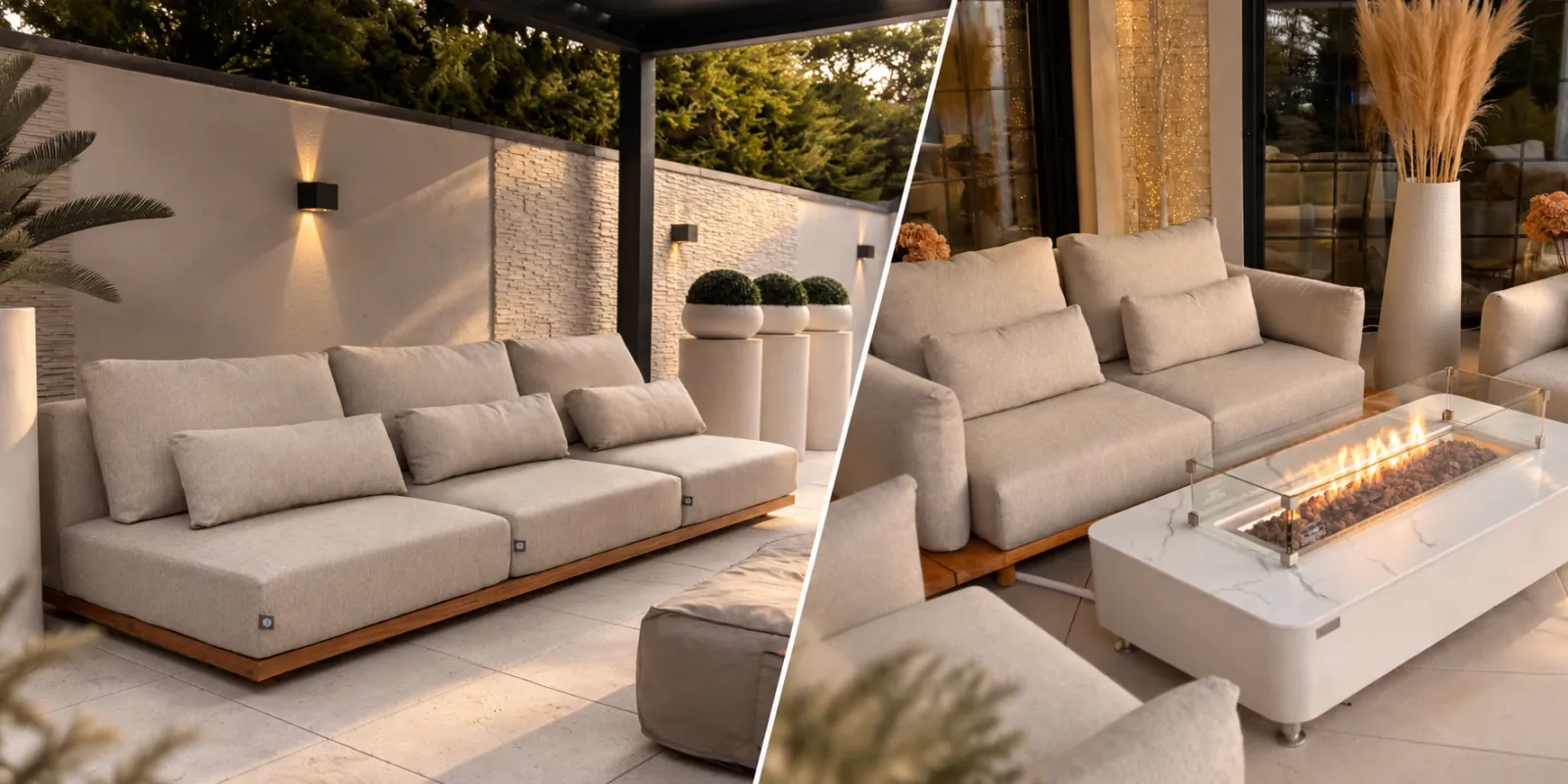
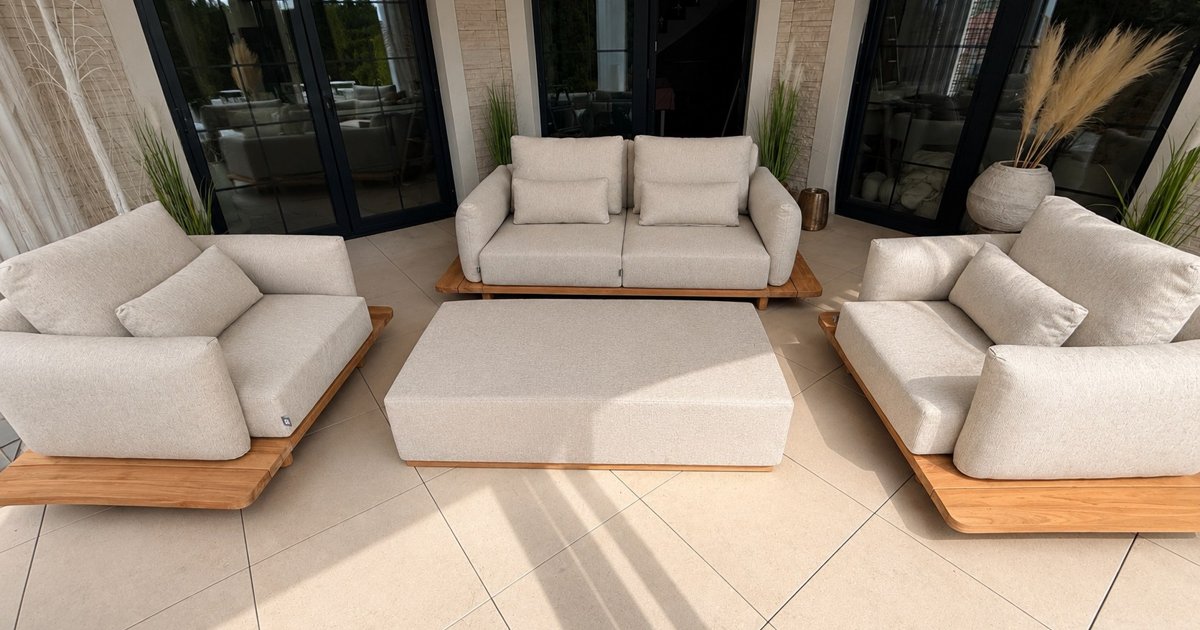
A space primarily intended for evening lounging does not automatically require a bulky dining set. According to product details, the SUNS Pico – compact designer teak lounge set is aimed at smaller terraces, urban gardens, and private relaxation nooks. It features organic lines without sharp corners and soft upholstery suited for both unwinding and social gatherings.
Before choosing, tape out the outline of the planned furniture on the floor according to verified dimensions. Test the door clearance and walking through with a serving tray. The practical benefit lies in buying a set that truly fits the space, rather than furniture you will find yourself replacing after the first season.
Versatile use: the advantage of a reconfigurable layout
If you alternate between quiet afternoons for two and gatherings with friends, modular lounge sets can be a sensible choice. On the SUNS Pico – designer modular teak lounge set with bouclé upholstery, the SUNS You Create system allows you to adapt the arrangement to suit your space.
However, the option to reconfigure a layout is not an automatic confirmation of the availability of individual spare parts or future extensions. Check both separately. For poolside relaxation, prioritise questions about drying times and comfort over mere colour coordination. The aim is to put together furniture that works even outside a carefully staged photograph.
Maintenance and protection: how to prevent premature replacement
Even top-quality materials cannot undo the consequences of improper care. In terms of long-term use, simple regular maintenance is more effective than sporadic intensive cleaning. Keep furniture free of dirt on an ongoing basis and observe the recommendations for the specific surface. There is no universal procedure for wood, metal, and upholstery.
Tailor cleaning to individual components
Only use methods and products suited to the specific finish of teak. For aluminium, take the surface treatment into account and avoid abrasive tools unless expressly recommended by the manufacturer. Clean fabrics according to the care instructions; a removable cover is not automatically machine-washable.
First, test the recommended product in an inconspicuous area. Neither pressure washing nor harsh chemicals are safe starting points. During routine checks, also look out for loose fixings or damaged contact points. Dealing with small issues early can prevent major problems.
Covers require dryness and air circulation
During longer breaks in use, consider protective covers for garden furniture, but always according to their compatibility with the specific pieces. Cover furniture that is clean and dry, and follow the instructions. A cover is no substitute for drying out cushions, and poorly fitted covers can trap moisture.
After rain, do not judge the condition of upholstery merely by touching the surface; internal parts may dry at a different rate. Inspect the entire set before putting it into long-term storage. If you move furniture under cover, do not mistake protection from direct precipitation for a completely dry environment. Condensation and ambient humidity can take their toll there too.
Checklist for responsible garden furniture selection
Start with a simple brief: where the furniture will stand, how often it will be used, and how much time you want to dedicate to its care. Then assess the frame, solid surfaces, covers, and filling separately. For every component, at least the material specification and recommended care instructions should be clear.
When claims are made about provenance, ask for specific documentation relating to the chosen model. Ask whether it is virgin or recycled wood, whether the recycled metal content is stated, and which textile components the declared composition refers to. A missing piece of data does not automatically mean a low-quality product, but it cannot be used as an argument for an environmental advantage.
Next, check repairability: can damage to an individual component be resolved, or would a larger unit have to be replaced? Inquire about replacement covers, cushions, fixings, and how the furniture is dismantled. Do not confuse the commercial availability of a spare part today with a guarantee of its indefinite availability in the future.
Finally, test for comfort and check your patio layout. A timeless look only holds value if the furniture also meets your functional needs. For long-term use, a well-thought-out set is far better than a multitude of pieces purchased without an overarching plan.
Neither teak, aluminium, nor recycled fibre provides a standalone answer to sustainability. A good decision combines verified information, suitable placement, proportionate care, and genuine utility. It is precisely this combination that makes the most sense for a patio that you do not want to refurnish every few seasons.
Featured products


Frequently asked questions
Is teak more eco-friendly than aluminium?
Without data on provenance, manufacturing, and lifespan, a clear winner cannot be determined. For teak, verify the origin of the timber; for aluminium, check any proportion of recycled raw material. For both, construction, care, and repairability are also decisive factors.
Does the greying of teak mean the furniture is deteriorating?
Greying is a common cosmetic change in teak exposed to the elements and does not, in itself, indicate a loss of function. However, it is necessary to distinguish patina from dirt or damage and to adhere to recommended care.
Is all aluminium furniture made from recycled material?
No. Aluminium is recyclable, but a specific product might not contain recycled raw material. Such a claim must be backed by manufacturer data relating to the given product.
Do the sofas and sun loungers listed feature covers made from recycled fibres?
In the available documentation for the models listed, a recycled composition for the covers is not confirmed. They cannot, therefore, be labelled as such. Request the precise composition and any certified proportion of recycled fibres prior to purchase.
Is quick-dry filling also recycled?
Not necessarily. Quick-dry design describes the function of the filling, whereas recycled origin indicates the source of the raw material. These are two independent pieces of information that must be verified separately.
Can a protective cover replace winter storage?
It depends on the specific furniture, the cover, and the manufacturer's instructions. A cover is not a universal substitute for proper storage. Furniture must be clean and dry before covering, and the cover should allow for the prescribed airflow.
Why can a modular set be practical in the long run?
The ability to reconfigure a layout helps adapt to how the patio is used without replacing the entire set. However, modularity in itself does not guarantee repairability or the future availability of additional modules; verify these conditions separately.