Tipy
Garden lighting: how to design outdoor terrace lighting
How to arrange terrace lighting, coordinate it with a parasol and furniture, and create a pleasant evening seating area. Solution comparison and practical examples.
Author: Zuzana Krajčírová, founder of Luxco Living
Published
What garden lighting should you choose for a terrace?
For a terrace, choose outdoor lighting based on three needs: comfortable dining, pleasant seating, and safe movement. Instead of a single strong source, design light for individual functional zones. Before purchasing, verify outdoor suitability, power supply method, mounting options, and potential dimming control. Parasol lighting can complement evening seating, but its suitability for a specific location must be confirmed by the specifications and instructions.
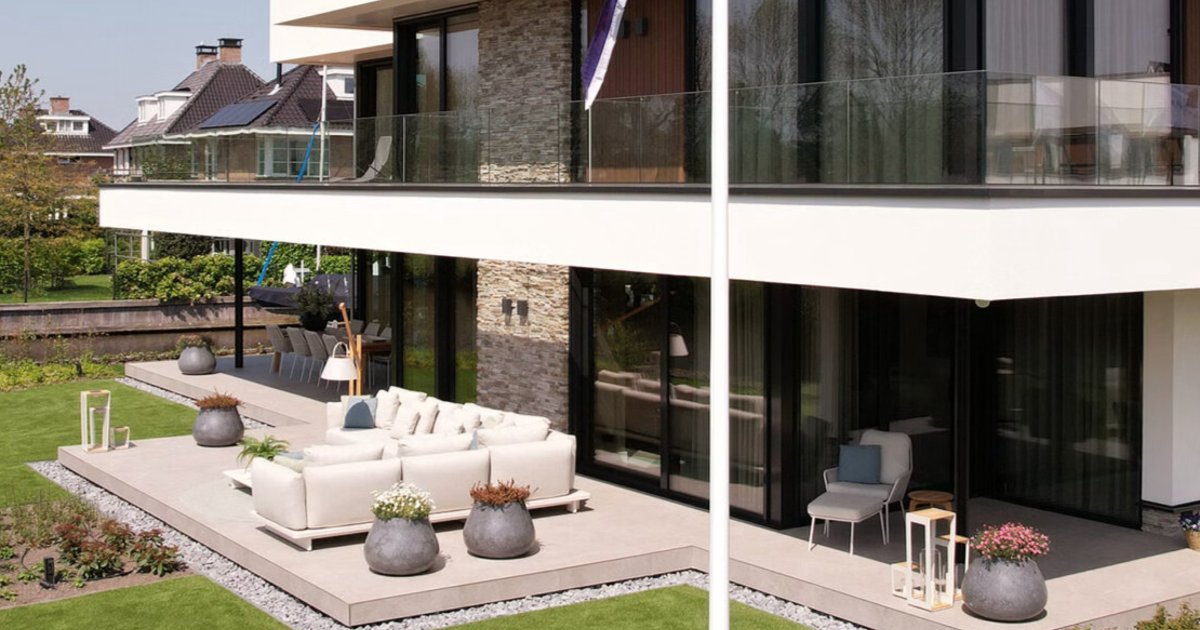
Well-designed outdoor terrace lighting does not need to illuminate the entire area equally. When dining, you need to see the table setting and the other guests, whereas when relaxing, softer light tends to be more pleasant. At the same time, the walkway to the house should not be left in darkness. The decisive factor is balancing these requirements, not the number of light points.
When browsing the garden lighting category, start by asking what the light on your terrace actually needs to achieve. The decorative effect is important, but it does not replace spatial clarity. Nor does an eye-catching product photo alone show whether a given solution will provide enough light for your dining or lounge area.
At the same time, view lighting as part of the furnishings visible even during the day. Its placement should not disrupt the proportions of the seating area, the view from the house, or the operation of the shading. An appealing result is achieved when the lighting follows the furniture layout and highlights in the evening precisely the areas where you want to spend time.
Lighting layout begins with furniture and daily habits
First, sketch out the dining area, sofa, lounge zone, and walkways. Add the door swing direction and the space required to pull out chairs. Only then address the position of the lights. Much like when choosing garden furniture, actual everyday use is more important than floor plan symmetry.
It is also useful to note down your evening routine. If you move to the sofa after dinner, both areas need to function properly, rather than having just a brightly illuminated table. The guide on terrace design before choosing furniture can help prepare the groundwork for such decisions.
Dining area: seeing the table and each other
Assess the light from the eye level of a seated person. A source that appears discreet when viewed from the doorway might dazzle a guest sitting opposite during dinner. Test all seats around the table and also watch for shadows on the place settings. Greater brightness on one side is not automatically better than a more evenly lit functional area.
When planning, factor in everyday movements: someone pulls out a chair, another brings food, and someone else walks towards the house. Neither the placement of the lighting nor any power cabling must obstruct these movements.
Seating area: checking both seated and lying down
On a garden sofa, eye level is usually different from that at a dining table. Therefore, test the lighting both sitting upright and leaning back. For an area intended for reclining, also check the upward line of sight. It is precisely there that a distracting light source might appear which could be overlooked during a routine inspection of the terrace.
Layering light: comfort without unnecessarily high brightness
Layering means dividing lighting according to function. The ambient layer aids orientation, task lighting at a used area supports a specific activity, and mood lighting completes the evening atmosphere. This does not necessarily require three different products. What matters is whether the desired scenes can be created and whether individual lights interfere with one another.
If the terrace already has basic lighting, test it first with the furniture arranged. Only then decide on additions. For a pergola, evaluate evening use together with seating positions and walkways. The roof structure itself says nothing about what lighting is included in a specific configuration.
Warmer-toned light can coordinate pleasantly with beige textiles and the tranquil colour palette of the terrace. However, the result also depends on intensity, direction, and surrounding surfaces. Therefore, do not select the colour temperature of the lighting in isolation from a sample chart, but based on how people, furniture, and the entire lounge area look under it.
Two evening scenarios instead of a single compromise
Prepare one scenario for dinner and a second for later relaxation. The first should support dining and serving, the second a calmer lounge atmosphere. If the chosen solution offers dimming or separate controls, make use of them; however, always verify these features for the specific product.
Finally, view the terrace from indoors. You will spot overly prominent glare points as well as areas where continuity with the house is lost. Not every darker area requires its own lighting. Maintaining a subdued background often helps the seating area feel cosier and avoids the impression of a uniformly lit utility area.
Parasol with lighting, or an add-on LED solution?
If you want to combine daytime shading with evening terrace use, it makes sense to choose both elements at the same time. The garden parasols category is the starting point, but suitability depends on the specific model. Light output, power supply, controls, and compatibility cannot be inferred from the name alone.
For comparison, it is useful to distinguish a complete parasol with lighting from a standalone accessory. The first route combines the choice of shading and lighting, while the second can address supplementing an existing seating area. In both cases, mounting requirements and set completeness must be verified before ordering.
| Approach | Main benefit | Disadvantage or limitation | What to verify |
|---|---|---|---|
| NOVARA parasol with LED lighting | Shading and lighting can be addressed in a single choice | Supplied without a base; specifications of the LED component are not specified here | The base, power supply, and lighting controls |
| Platinum RGB LED parasol lighting | Cordless operation, easy installation, and energy-efficient lighting | Universal compatibility and battery life are not substantiated | Attachment to a specific parasol and operating conditions |
| Supplementing an already lit terrace | Light can be focused on genuinely used areas | Multiple sources can cause glare or unnecessarily high brightness | The result when individual lights are switched on simultaneously |
NOVARA: choosing shading and evening lighting together
NOVARA garden parasol with LED lighting 4×3 Antracit / Camel Sand allows rotation of almost 360° and smooth positioning centimetre by centimetre. The shade can thus be adapted to the position of the sun. It is designed for gardens, terraces, restaurant seating, and more demanding outdoor conditions, and can be combined with SUNS furniture.
It is supplied without a base, which must be factored into the set planning. The available information here does not specify the parameters of the LED component. Therefore, before choosing, verify in particular the power supply method, controls, and the suitability of the light for the intended activity.
Add-on lighting: verify mounting first and foremost
Platinum RGB LED lighting for garden parasols is an energy-efficient solution for evening seating on the terrace, in the garden, or by the pool. Easy installation, cordless operation, and outdoor design are documented.
These features facilitate outdoor use, but they do not confirm universal compatibility. Have its suitability for your parasol verified in advance. From the available description, battery life, recharging method, and specific light adjustment options cannot be determined.
Practical examples of garden seating lighting
The following examples illustrate a thought process, not finished lighting projects. The specific number of sources and their placement depend on the layout as well as the documented lighting specifications. The goal is to harmonise the light with the furniture, not adapt daily movement to a randomly selected light point.
Family terrace: dinner and subsequent lounging
Imagine a terrace with a dining area under a parasol and a sofa closer to the house. First, verify whether the light at the parasol suits all seats at the table. Then sit on the sofa and check whether the light source shines directly into your eyes. Lighting suitable above a dining area can feel different when viewed from an adjacent lounge area.
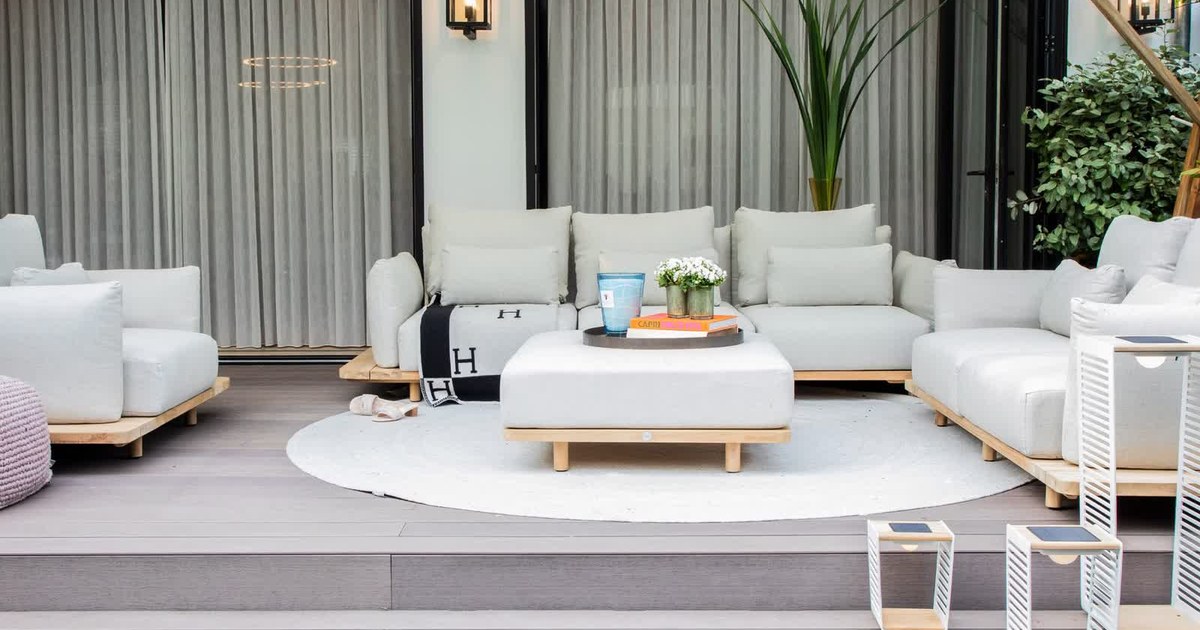
For the lounge area, you can consider the SUNS Bardi garden lounge set left bronze/Pebble desert bouclé during planning. It has generous seat cushions, ergonomic backrests, and a sturdy outdoor structure. The modular system allows corner, open, and larger configurations within the collection. Therefore, evaluate the lighting plan based on the chosen set, not merely on a single view of the product.
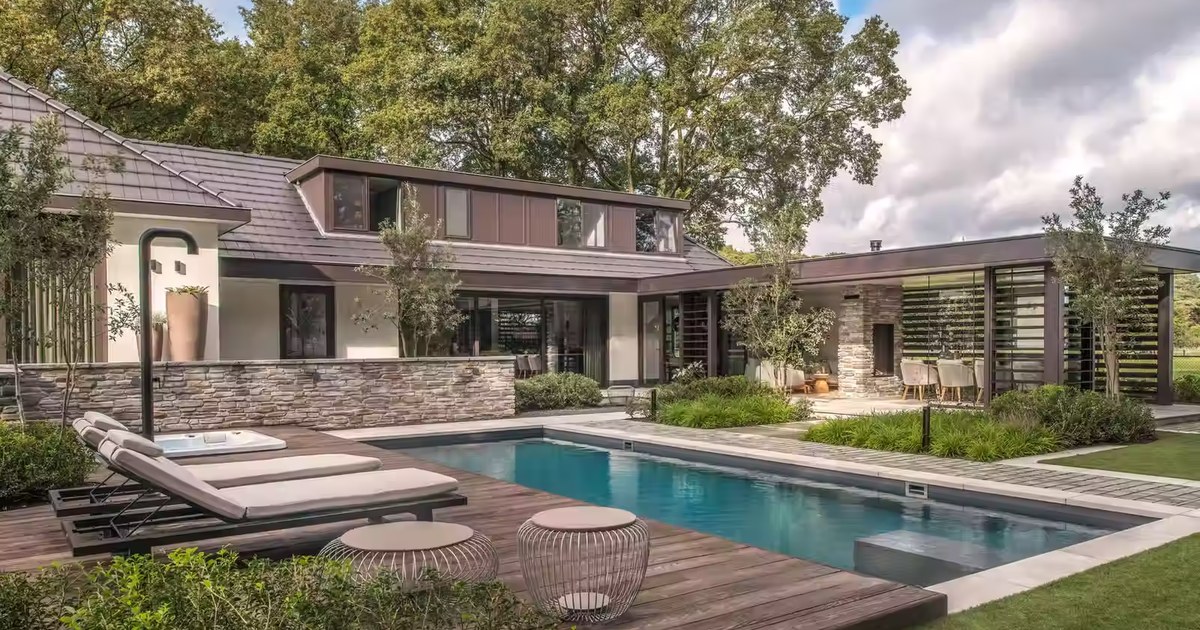
Relaxation spot by a home wellness area
Flow Yavi Beige – luxury garden daybed for modern terraces and wellness is a minimalist daybed that creates a dedicated relaxation spot in the garden, on a roof terrace, or by the pool. It is suitable for private settings as well as commercial terraces, hotels, resorts, and wellness or spa areas.
For such an area, evaluate the light primarily from a reclining position. Access should remain clear, but relaxation itself should not be disturbed by direct brightness. The article Home wellness design: When every centimetre decides the perfect space will also help with spatial connections.
Outdoor use, water, and safe installation
The designation "outdoor" is an important starting point, not a complete answer for all operating situations. Before choosing, you need to know the conditions of use, ingress protection rating, and installation method. Suitability for a terrace cannot automatically imply suitability for direct contact with water, submersion, or arbitrary poolside placement.
For cordless lighting, also check the guidelines for charging or other power replenishment. Cordless operation does not in itself indicate whether the device can be charged outdoors or left in operation in all weather conditions. For the LED accessory featured here, specific details regarding protection rating and power supply are not specified in the available documentation.
What to check with a parasol
Mounting the lighting must not obstruct the operation, closing, or routine handling of the parasol. Address compatibility according to the instructions and confirmed specifications, not merely on the basis of a seemingly similar frame shape. After installation, test all permitted movements and check that no collisions occur anywhere.
A suitable base and the correct use of shading remain a separate requirement. The presence of lighting does not alter the rules for using the parasol in windy conditions. Nor does a general suitability for more demanding outdoor conditions serve as confirmation of safety in any weather.
When to call in a professional
If the design requires permanent electrical wiring, a new connection, or solutions near water, bring in a qualified electrician. Lighting must not create obstacles in walkways. For wellness areas, also take into account wet surfaces, moving barefoot, and how the relaxation spot links to the house access.
Caring for lighting and coordination with furniture protection
Routine care begins with checking the manual. A cleaning agent suitable for furniture may not be suitable for lighting, and the method of cleaning the frame cannot be automatically transferred to electrical parts. Follow the recommended procedure, including disconnecting the power supply if applicable, and do not use a direct jet of water unless the manufacturer expressly permits it.
When cleaning the terrace, check the mountings, visible damage, and smooth movement of the shading. Do not use damaged electrical equipment. If the lighting changes position together with the parasol, also pay attention to whether any knocks or snags on surrounding furnishings occur during operation.
Plan furniture covers separately from protecting electrical accessories. A protective cover designed for a sofa does not automatically resolve the safe storage of lighting. Before covering, verify which accessories need to be removed, and do not leave the light switched on under a cover. For parasols, follow the instructions for the specific set and accessories.
At the end of the season, follow the prescribed storage conditions, particularly regarding humidity, temperature, and power supply maintenance. Outdoor designation alone does not confirm that it can be left unchecked year-round. If instructions are missing or do not address your situation, request clarification before storing.
Maintenance is also an opportunity to assess the original layout. If you have to awkwardly manipulate furniture every time you clean, or if a light obstructs the closing of the shading, return to the design. A good solution should be enjoyable not only in the evening, but also during routine terrace maintenance and use.
Checklist before choosing terrace lighting
Before making a decision, outline three specific situations: a routine family dinner, sitting with visitors, and quiet relaxation. For each, determine where people sit, where they walk, and where they look. This will give you a more practical brief than simply demanding as much light as possible.
Then compare your requirements with the documented product specifications. Look into outdoor suitability, IP rating, power supply, mounting, compatibility, and controls. If you want dimming, a specific light colour, or a particular operating time, you need explicit confirmation. It is not advisable to replace a missing parameter with guesswork based on the name.
Also check the completeness of the order. For the NOVARA parasol, it is essential that it is supplied without a base. For a standalone LED accessory, confirming compatibility with the intended parasol is key. These practical matters take precedence over final decisions about evening ambience.
Before finalising the layout, walk through the terrace after dark. Test the view from the dining table, from the sofa, from a lounging position, and through the glazing of the house. Watch for glare, shadows, and the flow of walkways. Where feasible, assess individual lights both separately and together.
The best outdoor lighting is not the most conspicuous. It is a solution that allows the terrace to be used comfortably even after dark, enhances the look of the furniture, and requires no daily compromises. Therefore, start with layout and habits, proceed with verifying specifications, and fine-tune the decorative effect only at the end.
Featured products


Frequently asked questions
How many light sources does a terrace need?
There is no universal number. It depends on the layout, lighting specifications, and how the space is used. First address the dining area, seating, and walkways. Add further lighting only after an evening test; not every darker area needs to be illuminated.
Is parasol lighting enough for the entire terrace?
Without knowing the lighting specifications and the layout of the terrace, this cannot be confirmed. Parasol lighting can complement evening seating, but visibility at the table, in the relaxation area, and along access routes must be checked separately.
Is the Platinum RGB LED lighting cordless?
Yes, the supplied data confirms cordless operation, easy installation, and energy-efficient lighting designed for outdoor use. However, it does not state battery life, the specific power method, or universal compatibility with all parasols.
Is the NOVARA parasol supplied with a base?
For the specified NOVARA garden parasol with LED lighting 4×3 Antracit / Camel Sand model, the base is not included in the delivery. Before ordering, it is therefore necessary to verify a suitable base solution for the intended location.
Can outdoor lighting be placed right next to a pool?
Outdoor suitability alone is not enough. The specific parameters, IP rating, instructions, and installation conditions are what matter. Suitability for direct contact with water cannot be assumed. Consult a qualified professional regarding electrical solutions near a pool.
Does it make sense to add light to an already illuminated terrace?
Yes, if the basic lighting is not suitable for a specific activity or causes glare when relaxing. First, however, test the existing setup with the furniture in place. The goal is improved comfort, not automatically higher overall brightness.
How to prevent glare while relaxing on a garden daybed?
Assess the lighting directly from a lying position, not just while standing. Check the direction of the light and the upward view. Adjust the arrangement or, if the specific fixture allows, the intensity so that access remains clear and direct brightness does not disrupt relaxation.