Tipy
Year-round patio: how to harmonise a pergola, seating and a safe area around the fire
How to design a patio for multiple seasons? Compare pergolas, consider your seating layout and discover what to verify before placing a fire feature under a roof.
Author: Zuzana Krajčírová, founder of Luxco Living
Published
How to create a patio you can use throughout the year
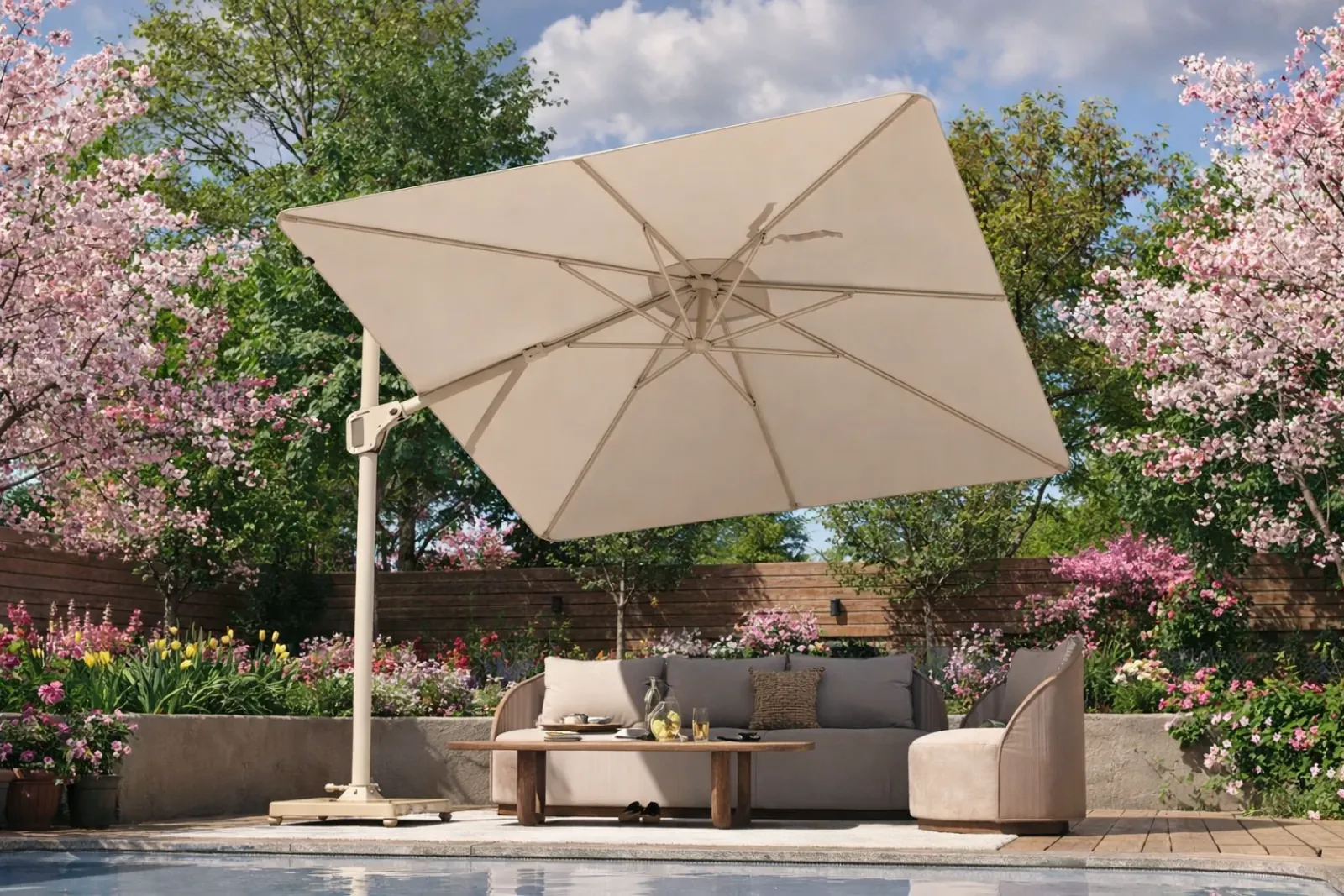
A year-round usable patio is created by combining a suitable pergola, a comfortably arranged seating area and weather-adapted care. The foundation is protection from the sun and, with selected structures, also from the rain, not the notion of an outdoor living room free from operational limits. If a fire feature is to be part of the space, its positioning must comply with the appliance's manual, ventilation requirements and safe clearance distances from both the roof and surrounding furnishings.
Therefore, the term 'year-round patio' does not mean the same level of comfort in July and in January. It means the opportunity to use the outdoor space across different seasons, provided current conditions and the limits of individual products allow. A well-designed patio can offer shade for a summer lunch, a pleasant setting for an autumn gathering, and a retreat for a brief rest on a sunny winter's day.
When choosing products at Luxco Living, it makes sense to begin with the layout, proceed to shading, and only then add individual pieces. The reverse approach often leads to a beautiful set obstructing walkways or the chosen roof failing to shelter where you actually sit. Treat the overview of patio pergolas as a starting point for comparing documented features, not as a promise of identical equipment across all models.
Layout first: where people walk and where people relax
Before choosing a structure, sketch out the doors from the house, the edges of the patio, changes in level and the main routes of movement. Add the sun orientation and the spots that are usually windiest. It is essential to observe real traffic: where you carry refreshments, where guests arrive from, and whether someone needs to walk behind an occupied seat.
A patio does not need to accommodate both a separate dining area and an expansive lounge corner. In a smaller area, it is usually better to select one primary function and execute it thoroughly. When planning garden furniture, first determine your usual number of users, and only then consider guests. A patio permanently crowded for the sake of a few gatherings a year may not prove practical.
Lounge and dining areas have different requirements
For the lounge area, comfortable access to individual seats and the view are decisive. In the dining zone, you also need to allow for pulling out chairs and serving around the table. Therefore, do not just draw the outlines of the furniture on your plan, but also the space required during use. It is precisely this second layer that often reveals that the originally selected layout lacks sufficient breathing room.
A practical trial before ordering
You can mark the outline of your intended pergola and key zones on the floor using easily removable tape. Walk the route from the door, simulate pulling out a chair, and check the view from indoors. Such a trial does not resolve structural engineering or assembly, but it will expose numerous layout errors. A more detailed preparation guide is available in our article what to prepare before designing a patio.
Luxe Gazebo and other pergolas: compare documented features
A louvred roof allows you to manage light, but specific capabilities vary by model. The mere presence of louvres does not substantiate rain protection, snow load resistance or the method of operation. When comparing, separate the information stated for the product from parameters that still need to be verified.
The Luxe Gazebo 275 × 365 cm pergola allows you to adjust its louvres to create full shade or let light into the space beneath the structure. Its modular layout can be extended with additional segments. It thus provides a setting for relaxation, gathering and dining, with future extensions best factored in right from the patio design stage.
If documented rain protection is essential, the ROTA aluminium pergola 600x360x250 matt white offers a waterproof roof when the louvres are fully closed. Their angle can be altered to adjust the balance of sun and shade. Its minimalist structure creates a year-round usable base for a dining or lounge set.
To combine daytime shading with evening illumination, the POSITANO LED patio pergola 360x360x250 matt anthracite is relevant. Its 3.6 × 3.6 m footprint is also suitable for smaller patios. The louvres regulate the intake of sun and air; year-round use remains subject to observing operational limits.
The SUNS ALVARO aluminium pergola 360 × 1200 × 250 cm – anthracite allows you to manage the sun by tilting the louvres. Closing them creates a waterproof roof that protects against rain. The area beneath can be utilised for a dining or lounge suite and relaxation throughout the year.
| Model | Documented features | Main benefit during planning | What else to verify |
|---|---|---|---|
| Luxe Gazebo 275 × 365 cm | Adjustable louvres, full shade, extension with additional segments | Ability to plan for future extension | Rain protection, anchoring and operational limits |
| ROTA 600x360x250 matt white | Sun and shade regulation, waterproof closed roof | Base for dining or lounging | Assembly conditions and operation during adverse weather |
| POSITANO LED 360x360x250 matt anthracite | Sun and airflow regulation, evening lighting | Combination of daytime and evening use | Installation conditions and specific operational limits |
| SUNS ALVARO 360 × 1200 × 250 cm – anthracite | Louvre tilting, waterproof closed roof | Space for a dining or lounge set | Suitability for the specific site and base requirements |
Advantages and disadvantages of a covered patio without exaggerated expectations
The primary advantage of an adjustable roof is the ability to respond to changing sunlight. You do not have to move your seating every time the sun's rays shift. With models featuring a documented waterproof closed roof, you additionally gain protection from overhead rain. At the same time, a pergola visually defines the space and can help organise a larger patio into a coherent whole.
The disadvantage lies in the necessity of treating the structure as part of the patio's construction and operation, not merely as decoration. It requires suitable positioning, an appropriate base and assembly in accordance with the manufacturer's requirements. Posts may obstruct walkways, the roof will affect light levels, and any further extension must respect the genuine limitations of the site.
Protection from above is also not the same as an enclosed room. Rain can blow in from the side, and perceived comfort is heavily influenced by wind. Without documented parameters, suitability for snow loads or strong gusts cannot be automatically assumed. The term 'year-round use' therefore never replaces specific operational guidelines.
When a modular solution makes sense
Modularity is advantageous if you wish to shade your primary seating first and extend the covered area later. However, it entails a practical prerequisite: suitable space must remain available for future segments. For the Luxe Gazebo, the option to add segments is documented, but the specific form of the extension and its feasibility must be verified for the intended location.
When you will appreciate combining shade and light
If you primarily use your patio after returning from work, the evening setup will be just as important as midday shading. Evaluate lighting from the perspective of a seated person as well as from indoors, ensuring it does not feel intrusive. For inspiration on the relationship between roof design and evening ambiance, see our study of a pergola with LED lighting.
The space around the fire: a glass surround is not permission to operate beneath a roof
When planning the area around a fire, the safety of the entire arrangement is paramount. Just because an appliance physically fits under a pergola does not imply it is permitted to be used there. Decisive factors are the specific appliance's instructions, required clearances, ventilation and whether operation beneath a roof covering is permissible. Unless you have confirmed these details, do not consider the placement resolved.
The Square glass wind guard for built-in fire pit keeps the flame clearly visible and complements the aesthetic of the fire table. It mitigates the effects of wind gusts and creates a physical barrier between the fire and its surroundings. However, these functions are no substitute for safe clearances or supervision.
Always verify the guard's compatibility with your specific fire pit. A similar shape or visual impression from a photograph is not enough. Furthermore, one cannot deduce from a glass barrier that it is safe to use the fire in any wind condition or in an inadequately ventilated space. Do not regard the glass as a surface safe to touch during operation either.
How to incorporate safety into the floor plan
The space around the fire should not serve as the primary thoroughfare between the house and other parts of the patio. The layout must minimise situations where someone walks closely past the flame or passes objects over it. Keep textiles and other items outside the specified safety clearances. In households with children or pets, anticipate the need for continuous supervision; a barrier does not replace it.
Three practical examples of patio arrangements
The following examples demonstrate a line of reasoning, not a finished installation design. For every location, you need to verify actual dimensions, the base, orientation and the requirements of the chosen products. The aim is not to pack as much furniture onto the patio as possible, but to bridge the gap between what you expect from the space and its everyday use.
A smaller patio for unwinding after work
If your primary goal is evening seating, concentrate on a single, well-defined lounge zone. The POSITANO LED 360x360x250 offers a 3.6 × 3.6 m footprint, combining daytime shade with evening illumination. Before deciding, verify whether the post positions leave unhindered access from the house and whether the canopy will unnecessarily encroach upon views from the living room.
A family patio developed gradually
When furnishing in stages, you can initially define the primary area for spending time together while reserving adjacent space. With the Luxe Gazebo, additional segments can be added, allowing future extension to be part of the initial plan. The benefit is thoughtful continuity; the drawback would be filling the reserved area with other furnishings and later having to reconfigure the entire layout.
An elongated terrace with multiple uses
On a long area, separate the dining space from the more relaxed seating area through layout rather than with an obstacle in the main thoroughfare. The SUNS ALVARO 360 × 1200 × 250 cm offers space for a dining or lounge set and, once the louvres are closed, a waterproof roof. However, even under a single structure, not all parts need be equally exposed to driving rain or wind; the specific location is decisive.
Year-round care: a roof does not replace maintenance
A pergola can mitigate some of the direct effects of the weather, but it does not turn a terrace into an interior. Moisture, dust, and driving rain can still reach beneath the roof. Therefore, tailor your care routine to your actual furniture and its manuals. A one-size-fits-all approach for all surfaces, fabrics, and structures is not a safe shortcut.
When cleaning, first verify the recommended method and the suitability of the cleaning product for the given surface. Without the manufacturer's approval, do not use harsh chemicals, abrasive tools, or pressure washers. Allow furniture and equipment to dry thoroughly before covering or storing. Covering a damp item can trap unwanted moisture precisely where you want to get rid of it.
Inspection following inclement weather
After strong winds or a prolonged break in use, check for visible damage and inspect the condition of accessible parts of the pergola. Do not force the louvres if frost or debris obstructs their movement. Always follow the procedure for snow, frost, and high winds outlined in the specific model's manual, rather than generic recommendations for louvred roofs.
Caring for the glass barrier
Clean the fire pit glass only after it has cooled down completely, following the manufacturer's instructions. Before the next use, check that it is properly seated and undamaged. In the event of a crack or loosening, do not use the setup until the issue has been resolved. For broader preparation of outdoor furniture for the cold season, you can also consult our guide on winterising garden furniture.
What to verify before the final choice
Before placing an order, prepare a floor plan, photographs of the site, and a list of priorities. Distinguish whether you primarily need shade, certified protection against rain from above, evening lighting, or the possibility of future expansion. Each of these needs leads to a slightly different comparison, and none can be substituted merely by the appearance of the structure.
For the chosen model, confirm the assembly method, foundation requirements, anchoring, and operational limitations. If the space is to include a fire, address its permissible placement before finalising the layout. Retroactively shifting safety clearances according to available space is not the correct approach.
The best terrace is not the one with the longest list of equipment, but the one you use without complicated preparation and unnecessary compromises. Certified pergola features, a clear walk-through layout, and a realistic maintenance plan hold more value than a vague promise of year-round comfort. Before making your choice, you can discuss specific configurations with Luxco Living via our contact page.
Featured products


Frequently asked questions
Does a year-round terrace mean comfortable outdoor living in all weather conditions?
No. Year-round use means the ability to use the terrace in various seasons within the operational limits of the equipment. An open pergola does not create a heated room, and comfort is influenced by temperature, wind, and driving rain.
Does every louvred pergola protect against rain?
This is not an automatic feature of all models. With the ROTA and SUNS ALVARO pergolas, a waterproof roof is certified once the louvres are fully closed. For the Luxe Gazebo, available data confirms light and shade regulation, not protection from rain.
Can the Luxe Gazebo pergola be extended later?
Yes, its modular system allows for expansion with additional segments. However, the specific form of the extension, assembly requirements, and the suitability of the adjoining surface must be verified beforehand.
Can I use a fire pit under a pergola?
Only if such placement is permissible according to the instructions for the specific appliance and the requirements for clearances, ventilation, and surrounding structures are met. The mere presence of a pergola or a glass barrier does not guarantee operational safety.
What is the purpose of a glass wind guard for a built-in fire pit?
For the featured square glass wind guard, clear glass preserves the view of the flame, reduces the impact of wind gusts, and creates a physical barrier. It does not replace supervision, safe clearances, or verifying compatibility with the fire pit.
What is most important when designing a small terrace?
Select one primary function and maintain comfortable access. On your floor plan, mark out not just the furniture, but also pulling out chairs, opening doors, and moving around the pergola posts.
Is it necessary to care for furniture even under a pergola?
Yes. Moisture, dust, and driving rain can still get under the roof. Cleaning, drying, covering, and winter storage must follow the instructions for the specific equipment, rather than relying solely on the fact that it stands under a pergola.