Tipy
Finnish sauna: temperature of 80–100 °C, dry air, and a ritual that has worked for centuries
How a Finnish sauna works, why the temperature is kept at 80–100 °C with low humidity, and what to focus on when choosing an outdoor model for the garden.
Author: Zuzana Krajčírová, founder of Luxco Living
The principle is simple
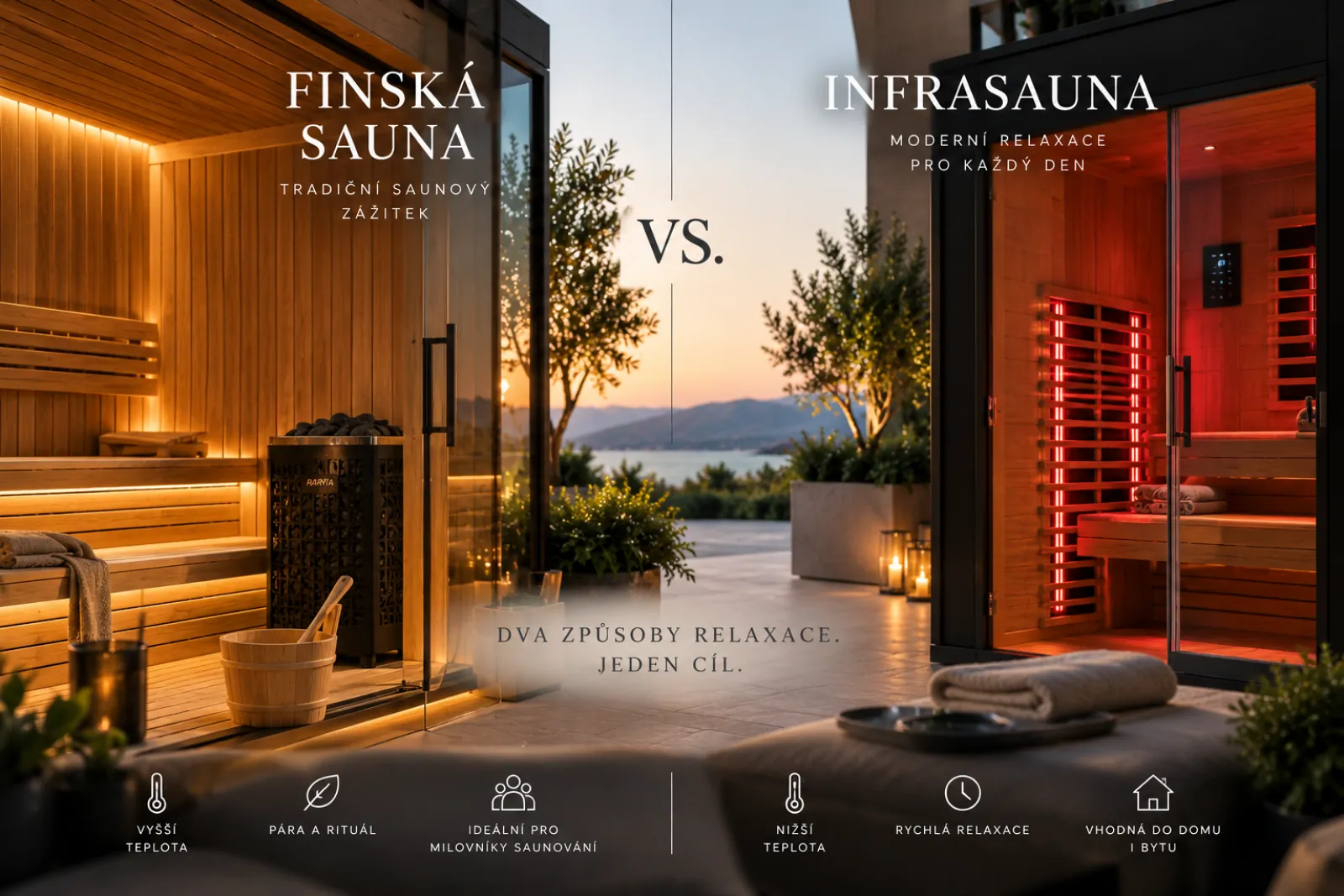
The sauna heater warms the air to 80–100 °C, while humidity remains low, usually around 10–20%. The body reacts to the dry heat with intense circulation and sweating.
A splash of water on the hot stones creates the classic Finnish atmosphere: a brief wave of heat followed by deeper sweating. It is precisely this alternation that underpins the entire experience.
What sauna bathing brings to the body
People most often appreciate regular sauna sessions for muscle relaxation, improved recovery after sport, better blood circulation, and higher-quality sleep.
At least as important is the mental phase: half an hour without a phone, without duties, and without rush. A Finnish sauna is a deliberately simple space where you leave all concerns behind.
Sauna bathing feels different outdoors
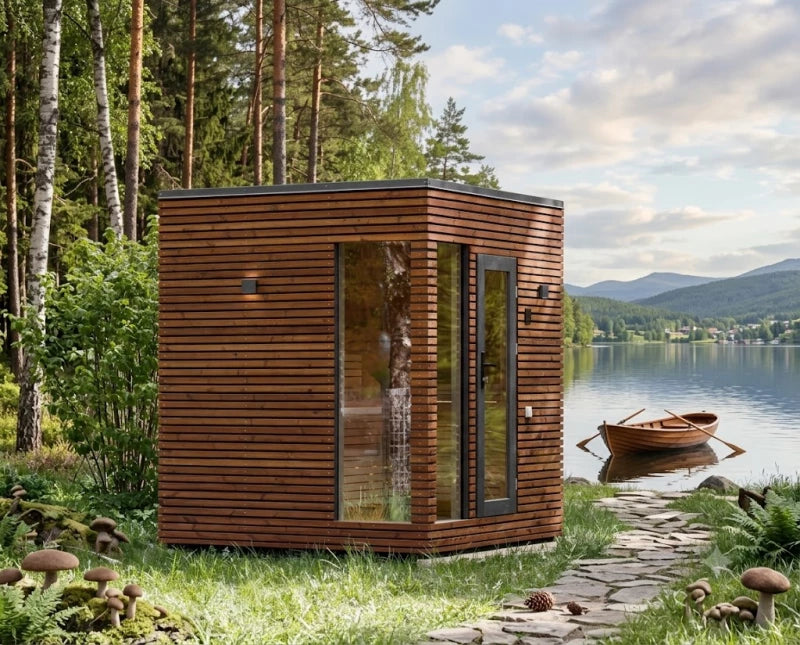
An outdoor sauna adds a dimension that an indoor one lacks: after warming up, you step out into the fresh air. In winter, the contrast between frost and heat is exceptionally invigorating, whereas in summer you will appreciate the peace of the garden in the evening.
Furthermore, modern outdoor models often offer extensive glazing, so sauna bathing also doubles as a moment to enjoy views of the garden or landscape.
Thermo wood vs. standard wood
In outdoor saunas today, thermo wood predominates—that is, wood that has undergone heat treatment without chemicals. It resists moisture better, moves less with temperature fluctuations, and boasts a longer lifespan.
For outdoor installations, it is practically standard on premium models—saving a great deal of surface care.
How to choose a sauna
First, answer questions about usage: for how many people, in what location, and at what frequency. Only then consider the design, heater type, size of glazing, and accessories.
A sauna chosen according to actual usage gets filled regularly; a sauna bought merely from a catalogue photo often sits idle. That is precisely why it is worth discussing dimensions and placement with a specialist before ordering.
Ritual: heat, cold, calm
Finnish sauna bathing is not merely about sitting in the heat. In a traditional session, you alternate between three phases: time in the sauna, rapid cooling with cold water or a plunge tub, and a rest phase with fluid replenishment.
You can repeat this cycle two to three times. The result is the feeling sauna enthusiasts seek—deep relaxation of both body and mind.
Care that pays off
Air the interior after every use, keep the benches clean, and inspect both the stones and the seals. Treat timber surfaces according to the manufacturer's instructions.
It takes just a few minutes a week, but it marks the difference between a sauna that still looks good after years of use and one that will soon require renovation.
Frequently asked questions
What temperature is typical in a Finnish sauna? Usually 80–100 °C with low humidity; however, everyone finds their own comfort level, and beginners can simply start lower.
Is a sauna better outdoors or inside the house? Both options work well; an outdoor model offers an open-air atmosphere and natural cooling down in the fresh air.
How often can a sauna be used? It depends on individual preferences; many people view the sauna as part of their weekly routine and use it several times a week.
What accessories go well with a sauna? You will enjoy it most when paired with a cold plunge tub, an outdoor shower, or a pergola sheltering loungers for relaxation.