Tipy
Finnish sauna vs. infrared sauna: which is right for your home wellness?
Compare a Finnish sauna and an infrared sauna by heating method, preparation time, space requirements, and running costs. A practical guide to choosing home wellness.
Author: Zuzana Krajčírová, founder of Luxco Living
Published
Finnish sauna or infrared sauna? How you relax decides
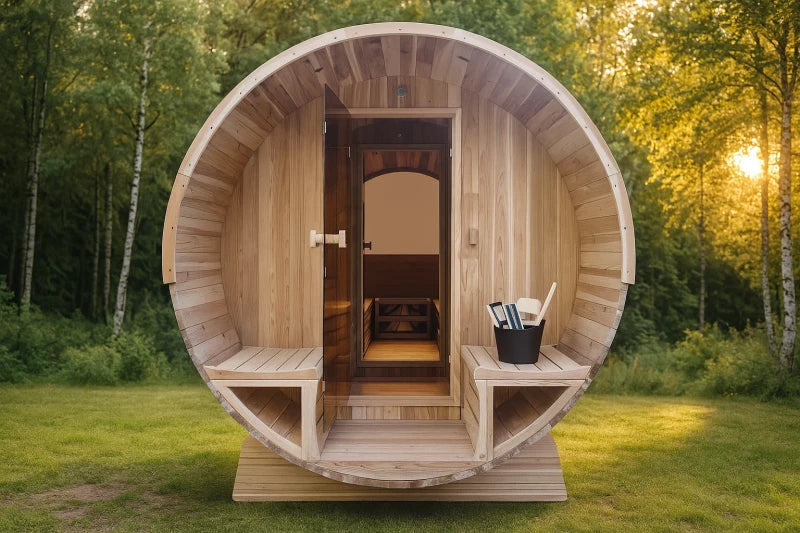
Choose a Finnish sauna if you want traditional sauning at high temperatures, pouring water over stones, and a subsequent cool-down. An infrared sauna is generally more practical for relaxing at lower air temperatures, with shorter preparation times and seamless integration into everyday life. There is no universal winner: your preferences, available space, and how often and with whom you plan to use the sauna are what matter.
The difference is not just in the intensity of the heat. A Finnish sauna offers a ritual for which you usually set aside uninterrupted time. An infrared sauna may better suit someone looking for a quiet moment alone without long planning. However, neither technology guarantees comfort on its own; that also depends on the cabin layout and installation conditions.
Before browsing the range, answer three questions: Do I want hot air and traditional sauna cycles? Will I be relaxing alone or together with other people? Do I have a suitable space inside the house, or am I planning outdoor wellness? Only then should you compare appearance, controls, and additional equipment.
The categories of Finnish saunas and infrared saunas represent two distinct directions of choice. Do not view them as rivals with one clear winner, but as different solutions for different habits.
How the heating principle, temperature, and atmosphere differ
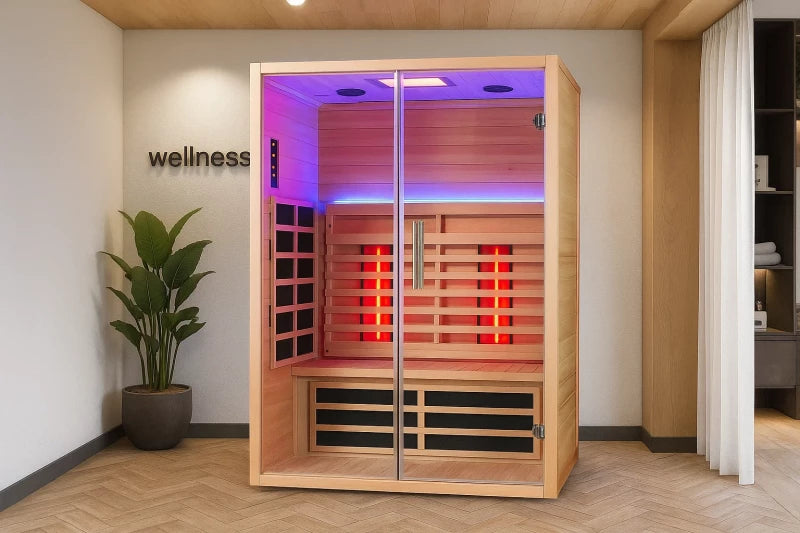
In a Finnish sauna, the stove heats the air and the sauna stones. Pouring water over them, if permitted for the given stove, temporarily increases humidity and alters the perceived intensity of heat. An infrared sauna uses infrared heaters whose radiant warmth acts directly on the body. As a result, the air does not need to be heated as intensely as in a Finnish sauna.
A lower air temperature does not mean the identical experience in a milder version. In a Finnish sauna, you perceive the environment of the entire cabin, whereas in an infrared sauna, your position relative to the heaters and their adjustability are also significant. When choosing, therefore, do not judge solely by the temperature figure, but also by the seating arrangement and heater placement.
| Criterion | Finnish sauna | Infrared sauna |
|---|---|---|
| Heating method | Stove heats the air and sauna stones | Infrared heaters act directly on the body |
| Air temperature | Higher, typical of traditional sauning | Usually lower than in a Finnish sauna |
| Humidity | Pouring water over stones increases it briefly | Usually low, without traditional water pouring over stones |
| Preparation | Usually longer warm-up of the cabin and stones | Often shorter, depends on the heater system |
| Nature of use | Sauna cycles, cooling down, and resting | Individual or shared warming according to equipment |
| Location | Indoor or outdoor depending on model specification | Indoor or outdoor depending on model specification |
| Energy consumption | Depends on power rating, size, and operation | Depends on power rating, regulation, and operation |
Finnish sauna: high temperature and traditional ritual
Finnish sauning involves alternating between heat exposure, cooling down, and resting. Pouring water over the stones adds another dimension to the experience, but requires following the stove's instructions. When using it together, participants must also agree on conditions that suit them; personal heat tolerance can vary considerably.
Infrared sauna: deep warming at lower air temperature
An infrared sauna may suit the preferences of people who find very hot air uncomfortable. Even so, it places a thermal load on the body and is not automatically a suitable alternative for everyone. Assess specific heaters, controls, and recommended usage routines according to the given model. Health suitability cannot be inferred, nor specific effects promised, simply from the name of the technology.
Advantages and disadvantages of both solutions in daily use
An advantage of one technology may be negligible to another user. Shorter preparation helps with spontaneous relaxation, but it will not replace the atmosphere of Finnish sauning for someone who seeks it out. Similarly, a larger cabin makes sense for shared use, but not automatically for every household.
Advantages and limitations of a Finnish sauna
The main advantage is the traditional experience: high temperatures, the option of pouring water over stones according to their manual, and the follow-up cool-down. A Finnish sauna suits people who want to treat sauning as a dedicated part of their day and enjoy creating a peaceful setting for it.
A drawback can be the longer warm-up time and the need to pay attention to space for the stove, its safe clearances, and ventilation. The high temperature may not be comfortable for everyone. When designing, it is also advisable to consider not only the cabin, but also convenient egress, cooling down, and subsequent relaxation.
Advantages and limitations of an infrared sauna
The advantage tends to be lower air temperature and often shorter preparation time. In some cabins, a compact or space-saving design is a benefit. Depending on the specific equipment, settings can be adjusted directly from inside, or individual heating zones can be regulated.
The disadvantage is that an infrared sauna does not offer the traditional experience with pouring water over stones. Suitable seating relative to the heaters is also essential. Differences between models can be substantial, so the label infrared sauna alone is not enough to assess comfort. Audio, colour lighting, or other features cannot replace well-engineered ergonomics.
Preparation and energy consumption: compare the entire usage pattern
A Finnish sauna needs to heat up both the cabin and the stones, which is why it usually requires more planning. An infrared sauna can be ready more quickly, but the exact time is determined by the specific system. It is not accurate to apply data from one model to the entire category. Include room preparation, the session itself, and subsequent ventilation in your time plan.
A specific example is the Hemlock Magnus 1 infrared sauna – extendable infrared sauna for one person. Its preheating takes approximately 10 minutes, and the internal touch panel allows you to programme operation up to 24 hours in advance. The extendable design allows the cabin to be slid back after use, saving space in a flat or smaller house.
Energy consumption cannot be reliably determined solely by the name of the technology. Power rating, preheating duration, session length, temperature regulation, and ambient room conditions are all decisive. Power rating reflects instantaneous consumption in a given mode, whereas energy consumption takes operating time into account. If heating is continuously regulated, a simple product of maximum power rating and time may not reflect reality.
For a meaningful comparison, describe the same scenario: how many times a week you turn the sauna on, how many people will use it, and how long it will run. A large cabin used predominantly by a single person may not match your needs. Without technical specifications and comparable conditions, it is inappropriate to promise specific savings.
A typical week will show the practical difference. If you regularly set aside an entire sauna evening, longer warm-up times may not matter. If you are looking to relax during irregular spare moments, easy preparation will probably carry greater weight.
Where to locate the sauna: flat, dedicated room, or terrace
Suitability of location is not determined solely by whether the cabin fits into the floor plan. You also need space for door opening, safe access, prescribed clearances, ventilation, and servicing. Before ordering, check the route for delivery and assembly, including doors, corridors, and stairs. Address electrical connections according to documentation and with a professional.
Interior: compact does not mean requirement-free
In a smaller flat, a space-saving infrared sauna can be an appealing option. Even so, not every bathroom or bedroom is automatically suitable. It depends on the environment, permitted placement, floor load-bearing capacity, and installation requirements. A more humid room must be expressly permitted for the specific cabin.
Draw not only the outline of the cabin, but also the open door and the regular walkway around it. Example: a free corner may seem large enough, but once the sauna is opened, it blocks the passage. Neither richer features nor a more attractive finish will solve such a problem. A well-considered floor plan prevents compromises with every use.
Exterior: only a suitably designated cabin can go outside
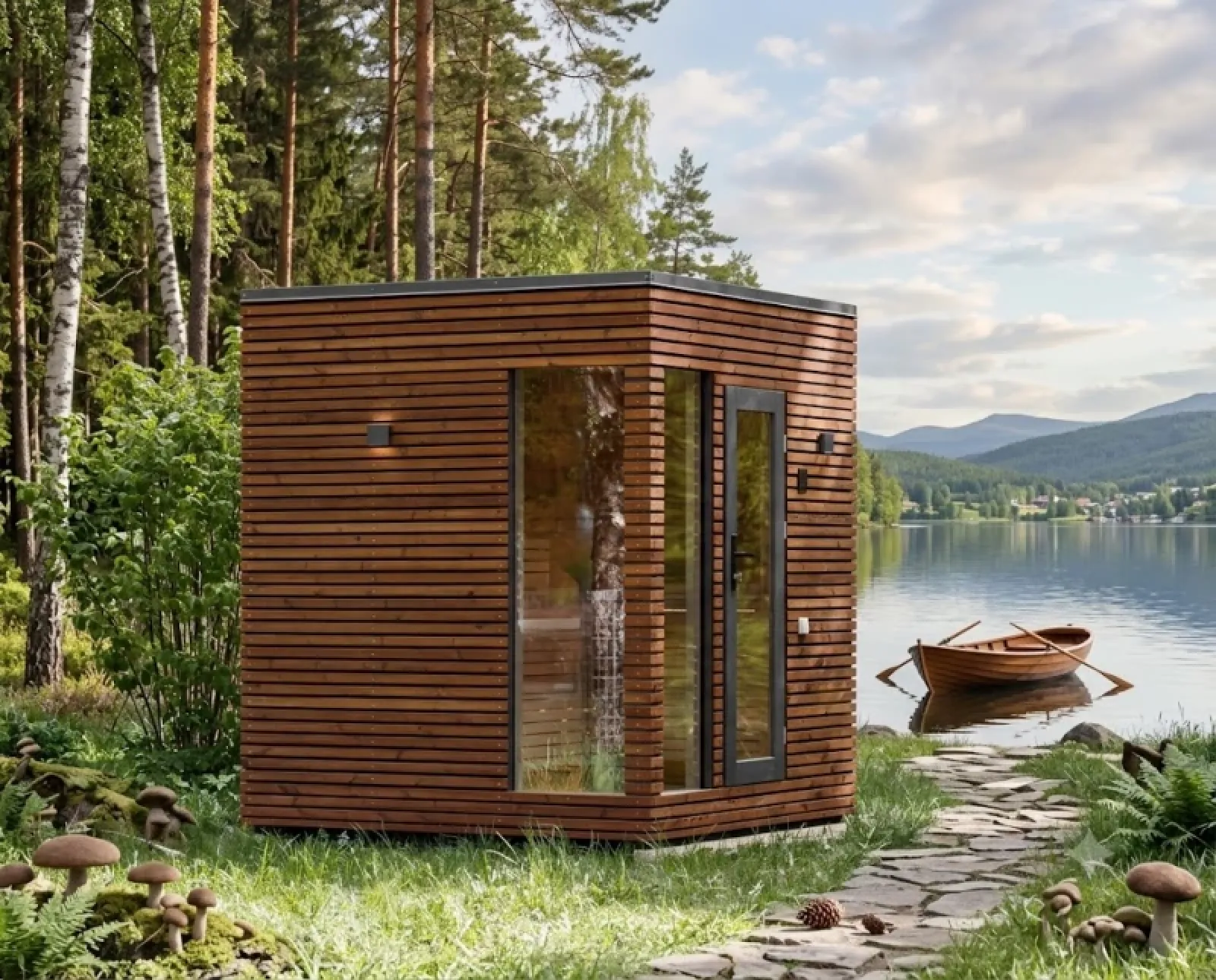
An infrared sauna is not automatically indoor, just as a Finnish sauna is not automatically outdoor. The construction and intended use of the specific product are decisive. The Niva infrared sauna is designed for year-round outdoor use and offers a compact wellness facility in the garden or on a terrace. A WiFi panel enables mobile phone control, and the ergonomic seating features lumbar support.
For an outdoor installation, check the base, surface water drainage, safe access, and electrical supply. On a terrace, it is also important to assess load-bearing capacity. Roofing alone does not turn an indoor cabin into an outdoor one. The context of placement is explored in more detail in the guide to choosing a garden sauna.
Capacity, ergonomics, and equipment: what holds genuine value when choosing
Choose the capacity based on the people who will actually use the sauna at the same time. Distinguish between the number of household members and the number of people taking a sauna together. If you take turns, you do not automatically need the largest cabin. If, on the other hand, you want to regularly relax together, a spatial compromise will be felt during every session.
In addition to external dimensions, consider bench layout, back support, and body position relative to the heating. If possible, try out the seating before making a decision. Comfort cannot be reliably assessed from a photograph alone. The controls should be clear and accessible to the person who will use the sauna most frequently.
Shared use and independent regulation
If users have different preferences, pay attention to the range of regulation. The Infrasauna i160C allows independent zone settings to tailor the intensity and extent of heating during shared sauna sessions and ensure efficient energy use. The cabin, made of FSC-certified Red Cedar wood, is complemented by ceramic flooring, chromotherapy, and Bluetooth sound system with a USB connection.
Zonal adjustment is a practical feature, but it does not replace checking the internal layout. Ask what exactly can be regulated and how the settings correspond to individual seating positions. For a couple, distinct heating settings may be more important than the number of supplementary light modes.
Compare heating variants and accessories separately
The Infrasauna Professional One offers a choice of Hemlock or Red Cedar wood and one of three heater systems. The specific heating equipment depends on the selected variant. The home wellness setup is complemented by coloured lighting, a sound system, and automatic ventilation.
For similar options, always compare the exact variants rather than just the shared model name. Music or lighting can enhance the atmosphere, but they are no reason to overlook an unsuitable size. A more detailed approach is provided in the article on how to compare the size, heaters, and equipment of an infrared sauna.
Safe use and care are part of the decision
The lower temperature of an infrared sauna does not mean it is suitable for everyone or that sessions can be extended indefinitely. Follow the manual for the specific cabin, start cautiously, and respect your body's reactions. If you feel unwell, end the session. Do not combine sauna use with alcohol and do not neglect hydration.
If you have heart or circulatory conditions, are pregnant, or are taking medication that affects your reaction to heat, consult a doctor regarding suitability. The same applies to any other health doubts. A general comparison of technologies does not constitute personalised medical advice, and a sauna is no substitute for medical treatment.
Cooling down after a Finnish sauna is part of the traditional ritual, but it does not have to mean an abrupt thermal shock. Tailor its form to your condition and experience. In an infrared sauna, intensive cooling down is not an essential part of use; a calm return to normal temperature and rest are what matters.
Plan maintenance as early as the selection stage. After use, ensure drying and ventilation in accordance with the manual, care for contact surfaces, and use only approved procedures or products. Do not clean heaters, controls, and electrical components in ways not permitted by the manufacturer. For wood, do not apply a randomly chosen oil or finish without verification.
Automatic ventilation does not mean maintenance-free operation, and an outdoor designation does not eliminate the need for regular inspections. Ensure clear access to areas that need cleaning or servicing. A well-designed sauna is not only enjoyable to use, but also easy to care for.
Practical scenarios: how to arrive at the right choice
Before making a final decision, imagine a typical day, not an ideal holiday. When will you turn the sauna on, who will use it, which way will you enter, and where will you rest afterwards? Such a scenario often reveals more important requirements than a mere list of features.
A smaller household and irregular time for relaxation
If you will be using the sauna mostly on your own and your free time comes unexpectedly, start by comparing compact infrared saunas. The priority will be suitable placement, easy operation, and warm-up times that fit your routine. In a small space, also check the cabin's dimensions during use, not just its dimensions when retracted.
A regular sauna evening and outdoor wellness
If you enjoy high temperatures and several consecutive sauna cycles, a Finnish sauna will probably be a closer match. Consider an outdoor project as a whole: safe access, privacy, cooling down, and a quiet spot to rest. The saunas category will help you get your bearings, but the final solution must match the site conditions and technical documentation.
A larger wellness area with differing preferences
In a larger home wellness area, both technologies can work side by side: a Finnish sauna for a planned ritual, an infrared sauna for individual warming sessions. However, the combination entails greater demands on space, installation, and maintenance. It primarily makes sense if you will genuinely use both options.
Before expanding your equipment, finalise the basic spatial design. Browse the home wellness range with a clear list of priorities, and also draw inspiration from the home wellness design where every centimetre counts. The best choice is a sauna that fits your rhythm of life and one that you can use comfortably, safely, and regularly.
Featured products


Frequently asked questions
What is the main difference between a Finnish sauna and an infrared sauna?
A Finnish sauna uses a heater to warm the air and sauna stones. An infrared sauna uses infrared heaters acting directly on the body, so the warming takes place at a lower air temperature. Thus, both the heating principle and the character of the experience differ.
Is an infrared sauna suitable for a flat?
Yes, a suitably chosen model can be a solution for a flat. However, requirements for placement, ventilation, electrical connection, and safe clearances must be met. Also check installation access and space for opening the door.
Which sauna has lower energy consumption?
Without comparing specific models under the same usage pattern, a winner cannot be determined. Power consumption is influenced by wattage, regulation, warm-up and session duration, as well as ambient conditions. Shorter preparation time alone is no guarantee of specific savings.
Must an intensive cool-down follow an infrared sauna session?
Intensive cooling down is not an essential part of using an infrared sauna. Rest and a calm return to normal temperature are what matters. Follow the manual and consider your state of health; sudden cooling is not a universal recommendation even after a Finnish sauna.
Can an infrared sauna be placed in the garden or on a terrace?
Yes, provided that the specific model is designed for outdoor use. Infrasauna Niva is built for year-round outdoor operation. For every installation, it is necessary to check the base, access, connection, and, if applicable, the terrace load-bearing capacity.
Is an infrared sauna better for your health than a Finnish sauna?
This cannot be stated as a general rule. A lower air temperature may be more pleasant, but both variants place a thermal load on the body. If you have health issues, are pregnant, or are taking relevant medication, consult a doctor regarding suitability.
Does it make sense to have both a Finnish sauna and an infrared sauna at home?
Yes, if you make use of their distinct character and have sufficient space as well as technical facilities. A Finnish sauna can serve for traditional sauna evenings, and an infrared sauna for individual relaxation. However, a well-thought-out layout takes precedence over the number of appliances.