Tipy
How to create a home wellness space: sauna, hot tub and a space for peace
How do you connect a sauna, infrared sauna, hot tub and cold plunge tub? Design a home spa tailored to your space, privacy and personal rhythm of relaxation.
Author: Zuzana Krajčírová, founder of Luxco Living
1. Start with how you unwind, not a checklist of equipment
Design your home spa around how you want to relax: for a classic sauna experience, combine a Finnish sauna with a cold plunge tub and a place to rest; for shorter, individual relaxation, consider an infrared sauna. If you are drawn primarily to shared evenings in the water, opt for a hot tub. Combine all these elements only when you have both the space and a genuine use for them.
Before making your choice, picture an ordinary evening rather than an exceptional weekend with guests. Will you use the spa alone, as a couple, or with family? Do you want a regular sauna ritual, or rather an undemanding moment of calm? The answers will help determine both the capacity and the scope of the entire setup.
2. Finnish saunas and infrared saunas offer a different experience
A Finnish sauna belongs to traditional sauna bathing at higher temperatures. An infrared sauna works differently and may suit those who prefer lower temperatures and individual heat therapy without the full classic ritual. They are therefore not two interchangeable forms of the same equipment, but different ways of using a home spa.
For a compact interior, the Full Spectrum Black Front 9101C is a prime example. This single-seater model measures 90 × 100 × 190 cm. It shows that a dedicated space for relaxation does not require a large room; when planning, however, always factor in comfortable access.
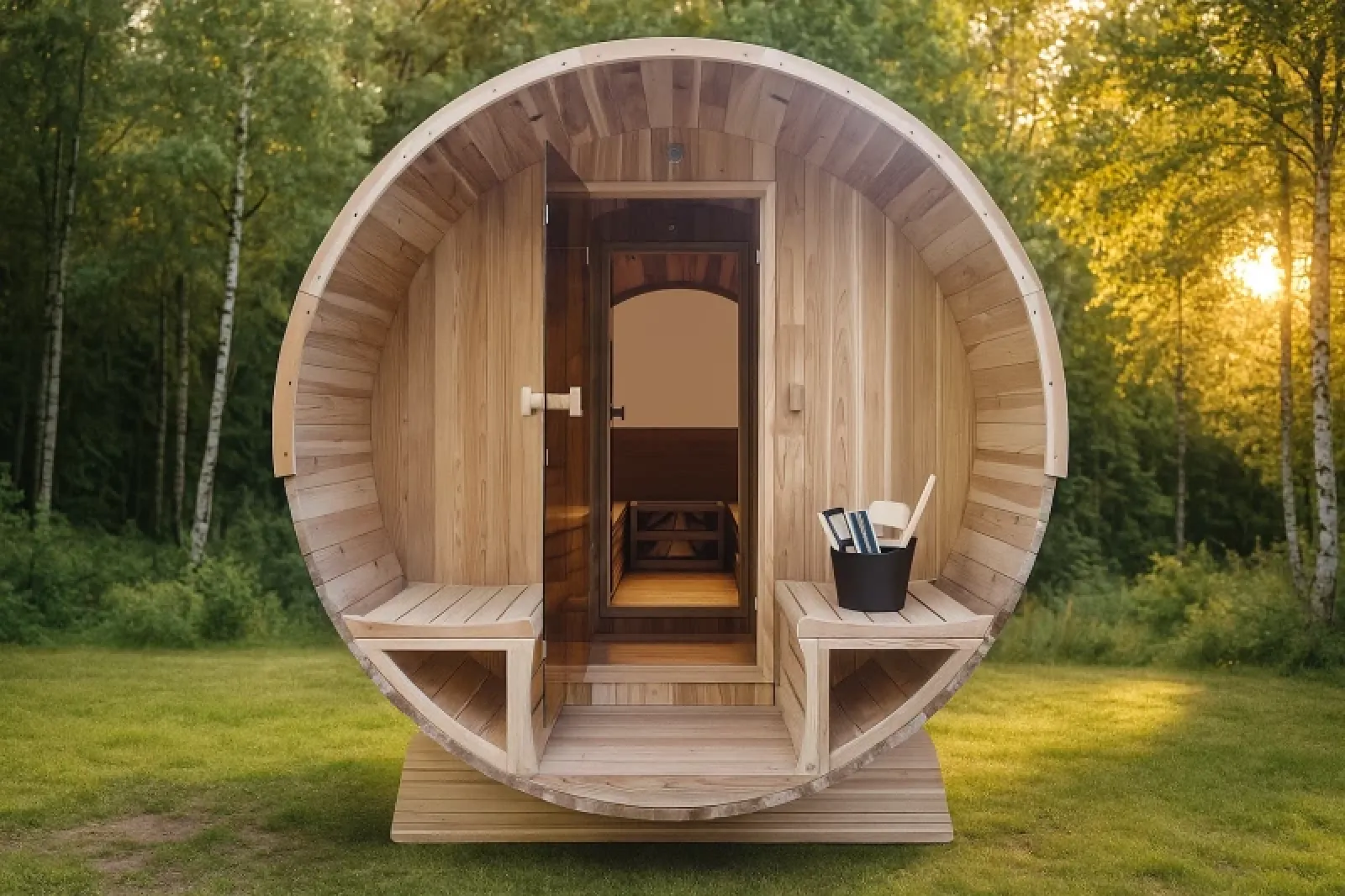
In the garden, a sauna can also complement the architecture. Inspire 240 × 300 cm combines a sheet-metal exterior with spruce timber, an aspen interior, large-format glazing and integrated LED lighting. A different impression is created by the TR170 – Halfglas two-person barrel sauna, which pairs red cedar with a glazed section.
3. The cold plunge tub belongs alongside the sauna
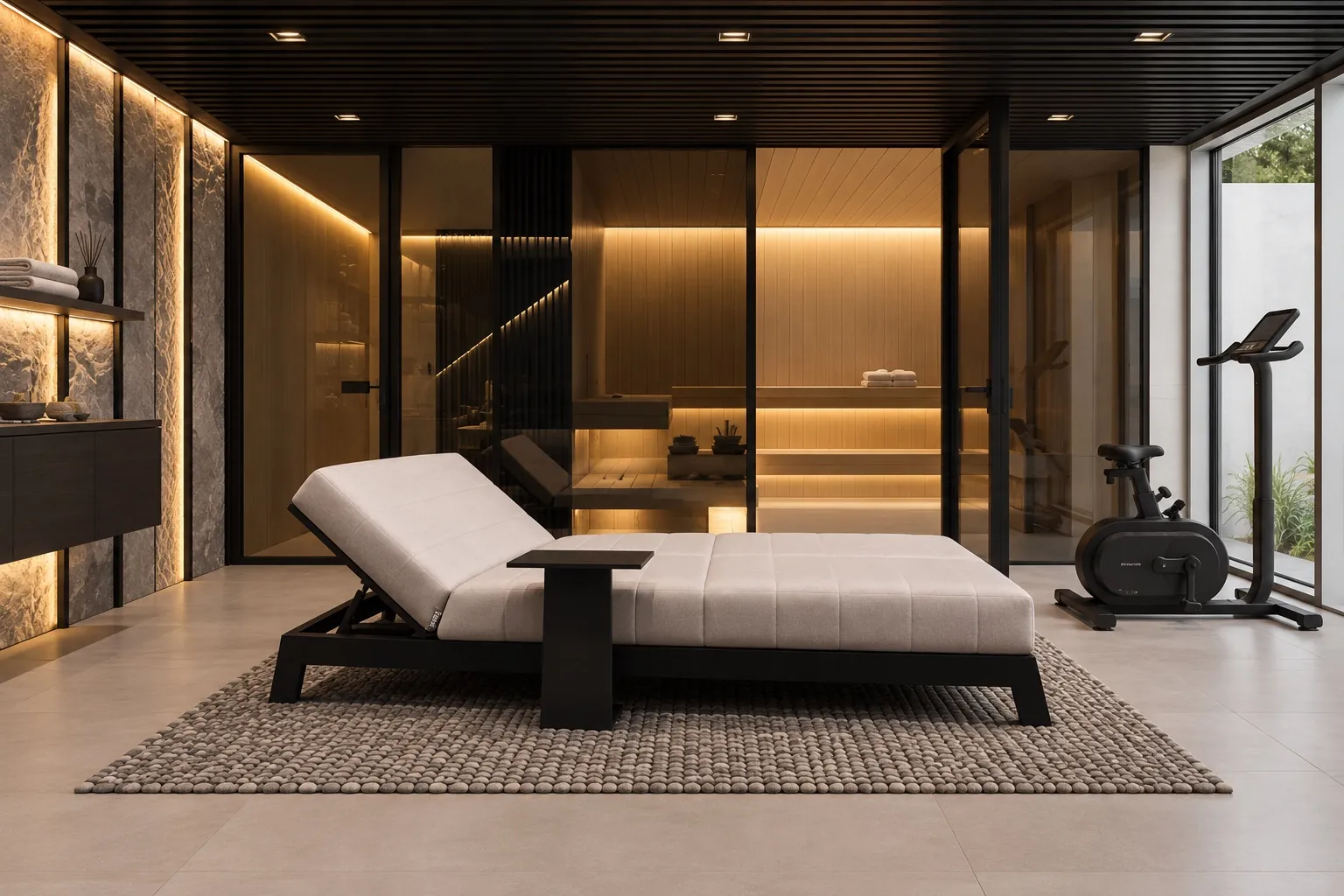
If sauna bathing is to form the core of the space, plan for cooling down and subsequent rest at the same time. A cold plunge tub complements the heat experience with the contrast of cold; a sun lounger or a comfortable armchair then provides a place to take a break. It is precisely the seamless flow between these areas that gives the entire setup practical sense.
A tub can also blend visually into a contemporary garden. An example is the single-person design with a stainless steel insert and an outer casing made of triple thermo-wood, measuring 110 × 130 × 110 cm. Alongside aesthetics, pay attention to maintenance and the clearance around the tub. An outdoor shower can round off the cold-plunge zone.
4. A hot tub creates a place for shared moments
Choose a hot tub for a different reason than a sauna: its focus is on spending longer in the water and unwinding together. It is therefore ideal for a concept centred around evenings for two or family relaxation. There is no need to purchase one simply to make the setup feel complete.
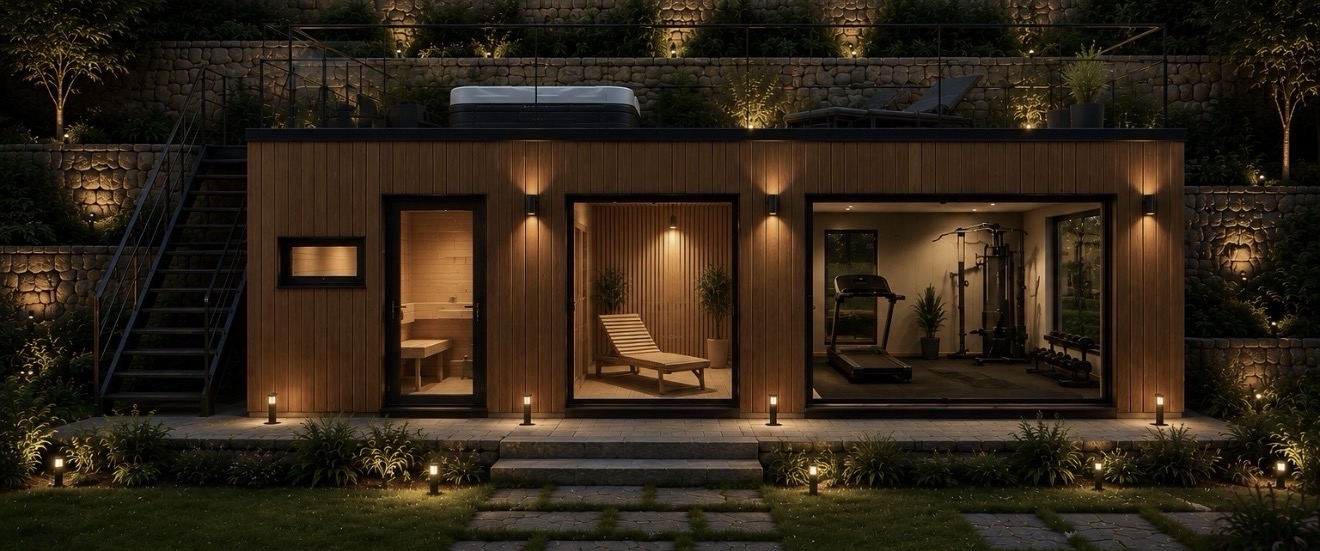
In a larger garden, a sauna, cold plunge tub and hot tub can function alongside one another without forming a single cluttered corner. Allocate separate, naturally linked areas for them. Add lounge seating, a side table and space for towels to the water area so that comfort does not end the moment you step out of the water.
5. Connect zones with materials, light and privacy
The layout of a garden spa can be based on four activities: heating up, cooling down, soaking in water and resting. You do not have to include all of them. A smaller setup might only need an indoor infrared sauna and a comfortable spot to unwind, whereas a more expansive garden offers room for a dedicated lounge area as well.
The entire space will be unified by well-thought-out lighting, greenery and furniture in matching materials. Privacy screens, tall planters, or a combination of the two will help create privacy. A pergola over the hot tub or seating area can provide sun protection and extend usability in less favourable weather. The goal is not to fill the space, but to make spending time there more enjoyable.
6. Practical amenities determine everyday usability
Before settling on the final layout of the equipment, think through access from the house, electricity and water connections, drainage, and a safe surface around the water. Path lighting and space for bathrobes and towels deserve equal attention. These subtle details have just as much impact on comfort as the setup itself.
Also factor in easy maintenance and resting between individual activities. A smaller, well-organised wellness area may suit your routine better than an expansive setup whose use requires too much preparation.
7. FAQ: What to clarify before choosing
Is an infrared sauna more suitable for a small space? It can be, as there are very compact single-person designs available. However, the deciding factor remains whether you prefer individual deep warmth or traditional Finnish sauna bathing.
Does a home spa have to include a hot tub? It does not. A sauna, cold plunge tub and resting area make a meaningful setup for a sauna ritual. A hot tub adds a different type of relaxation.
Can a garden spa also be used in winter? Yes, an outdoor sauna and hot tub can be part of a year-round concept. What matters is suitable positioning, sound technical design, and protecting the space from harsh weather.