Tipy
How to furnish a modern terrace: furniture, shading and space for relaxation
Furnish a modern terrace according to your lifestyle. A practical guide to spatial layout, choosing a sofa, sun lounger, pergola and parasol.
Author: Zuzana Krajčírová, founder of Luxco Living
Published
1. How to furnish a modern terrace: start with how you use it
The best way to furnish a modern terrace is to first determine its primary use, measure the space and plan the furniture together with shading. Then coordinate the colour scheme, address evening lighting and plan for equipment maintenance. Priority goes to comfort, clear walkways and proportions: a well-placed sofa or sun lounger will serve you better than a terrace crowded with items you rarely use.
Before choosing specific models, describe a typical day outdoors. Do you primarily want to relax as a couple, spend afternoons with the family, or entertain friends? Make decisions based on everyday use, not on a single large gathering each season. The number of seats and the extent of shading should reflect daily living.
Draw up your list of priorities as well. Some need comfortable social seating above all, while others want a quiet reading spot. If the terrace has to serve multiple functions, identify one main purpose and subordinate the others to it. This provides a clear guideline when deciding whether an additional piece of furniture genuinely adds value or merely encroaches on open space.
Treat selecting from the garden furniture category as the next step after basic planning. First, you need to know what space you are furnishing and what you wish to do there. A modern look then emerges naturally: from an uncluttered layout, recurring colours and a few well-chosen elements.
2. Measure the terrace and divide it into functional zones
Record not only the length and width of the terrace, but also doors, steps, pillars and other fixed obstacles. Sketch the main route between the house and the outdoor area onto a simple floor plan. Furniture must not impede door openings or force you to navigate around an entire seating arrangement every time you pass through.
Observe the terrace at different times of day. Morning sun can be pleasant, whereas afternoon sun exposure in the same spot calls for shade. Make note of the prevailing wind direction and views from surrounding areas, too. These factors will influence the placement of the relaxation area just as significantly as the dimensions themselves.
Small terrace: one main function and clear access
On a smaller footprint, one well-appointed seating setup usually works better than several cramped zones. Allocate space for the primary furniture first, and only then assess whether room remains for a standalone lounger. It is not enough for furniture simply to fit the floor plan; you must be able to walk up to it comfortably, sit down and stand up again.
A practical approach is to mark the outline of the chosen furniture on the floor and walk the usual routes. Use verified dimensions of the specific option, not estimates from photographs. Factor in the space needed to operate any shading as well.
Larger terrace: continuity instead of isolated islands
On a larger terrace, you can separate social seating, a dining area and a quiet relaxation corner. Position the most frequently used zone so that it is easily accessible from the house. In contrast, situate relaxation away from main thoroughfares. Link the individual areas through colour and maintain clear transitions between them.
Before consulting, prepare a floor plan, photographs and a list of priorities. The guide what to prepare before choosing terrace furniture will also help. The more precise your brief, the easier it is to identify which solution fits the actual space.
3. The garden sofa as the cornerstone of the social area
If you spend most of your time on the terrace with family or friends, the sofa should take centre stage. Consider seating posture, access to individual seats and orientation towards both the house and the view. A set positioned merely along a blank wall may not create the most inviting setup for conversation.
For a modern outdoor environment, the SUNS Casto garden sofa set is well worth considering. The collection employs natural colour tones and subtly contoured outlines. Ergonomically designed seating with outdoor upholstery and quick-drying seat fillings is engineered for lingering with family or friends, and also complements the space beneath a pergola.
However, the exact composition of the set sold and its definitive dimensions are not specified in available documents. Therefore, confirm the specific configuration before incorporating it into your design. The number of elements supplied, their size and the required floor area cannot be reliably deduced from photographs alone.
Advantages and limitations of sofa seating
The advantage of a sofa is a clearly defined focal point for the terrace and a dedicated setting for time spent together. The limitation is the footprint it occupies, even when only one person is using the terrace. If solitary reading or reclining predominates, a sizable social seating set may not be the most sensible priority.
When trying out seating, do not rely solely on first impressions. Check whether the posture remains comfortable after sitting for a while and whether standing up is effortless. At the same time, quick-drying filling does not mean the cushion will be instantly dry after every shower; follow the manufacturer's care and maintenance instructions for each specific product.
4. Sun lounger or daybed? Choose according to your rhythm of relaxation
A dedicated relaxation area makes sense when you genuinely use it and it does not obstruct everyday movement. When comparing sun loungers, consider whether you need to change their position during the day, whether you relax alone or as a couple, and how much space you wish to allocate to a quiet zone.
| Solution | Main use | Advantage | What to consider before choosing |
|---|---|---|---|
| Garden sofa | Conversations and gathering together | Creates a focal point for the social area | Number of seats, configuration and clear walkways |
| Standalone lounger | Reading and individual relaxation | Allows you to define a smaller quiet zone | Access and any intended route for repositioning |
| Daybed | Dedicated relaxation area | Provides relaxation with its own designated space | Floor plan and integration with other parts of the terrace |
| Combination of sofa and lounger | Both social and individual use | Separates different ways of spending time | Whether sufficient open floor area remains |
A lounger for relaxing in different spots on the terrace
Amori Tuscan Sand features ergonomic shaping and comfortable cushions for relaxing in the garden, on the terrace or poolside. Two transport wheels make repositioning effortless. The neutral beige finish blends seamlessly with modern architecture and bioclimatic pergolas alike.
The ease of moving it is particularly welcome when you want to catch the morning light and seek shade later on. However, check the moving path beforehand: thresholds, steps or narrow walkways can limit practical use. Wheels are no reason to overlook suitable positioning.
A dedicated spot for longer relaxation
Flow Yavi Beige is a minimalist daybed that creates a dedicated relaxation spot in the garden, on a roof terrace or poolside. It suits both private settings and commercial terraces, hotels, resorts and wellness areas.
The benefit of such a solution is a clearly defined haven of tranquillity. From a layout perspective, the drawback may be reduced flexibility when dividing the terrace into multiple functions. Before choosing, check the dimensions and operational space of the specific version; the daybed label alone is no substitute for exact measurements.
5. Pergola and parasol: plan shading alongside furniture
Shading is not an afterthought. It determines where sitting will be comfortable and whether you will use the terrace when the sun is at its strongest. The position of the structure, the span of shade and space for operation therefore belong in the very same plan as the sofa and loungers.
A pergola creates a permanent framework for the terrace
The pergolas category is an ideal starting point if you want to approach shading as a permanent feature of your layout. The advantage is a clearly defined living area. The limitation is reduced flexibility for later layout changes, alongside the need to assess location, base surface, anchoring and operating conditions in advance.
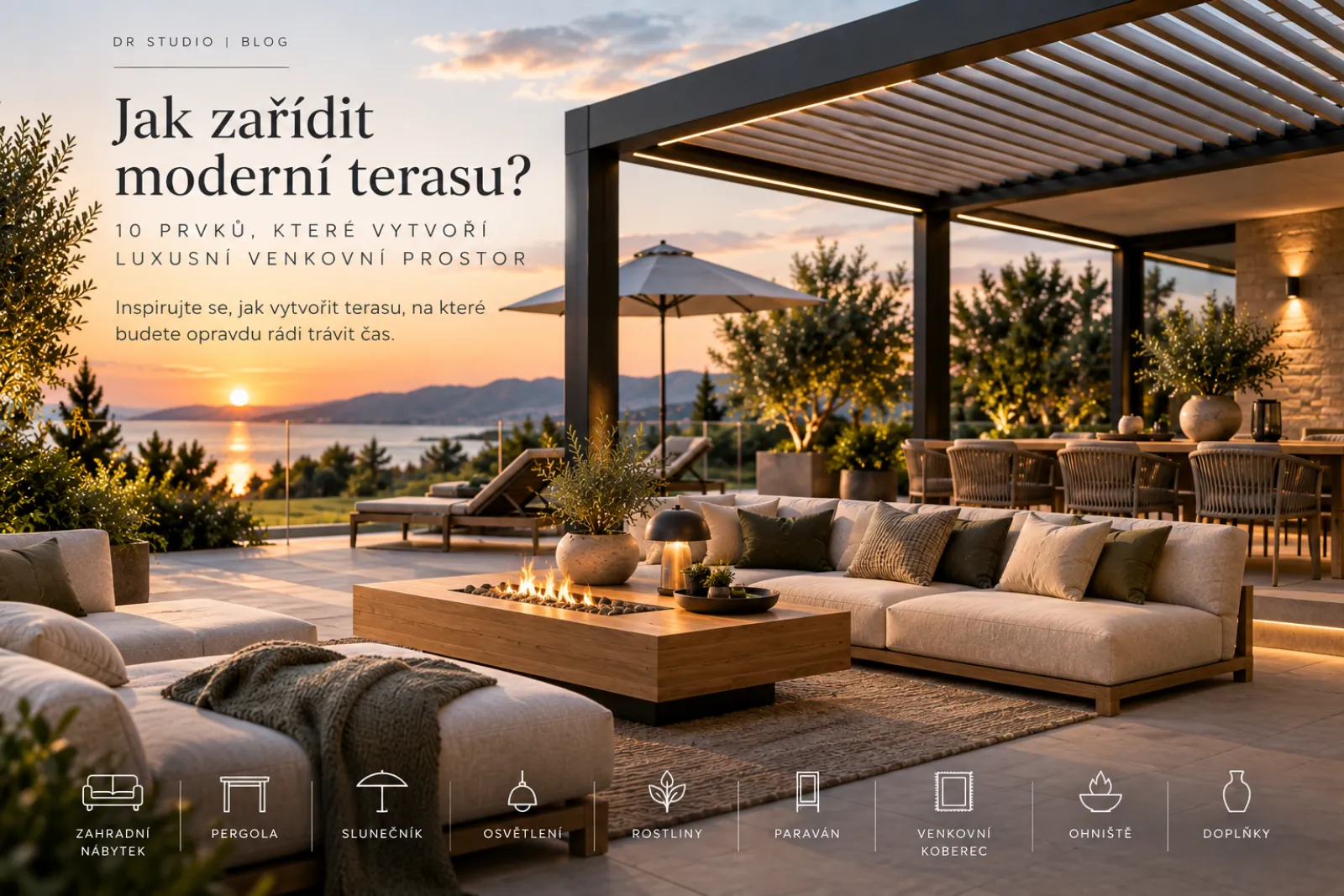
The POSITANO LED 360x360x250 pergola in matt anthracite has a 3.6 × 3.6 m footprint, making it well-suited to smaller terraces too. It combines daytime shade with evening lighting. Adjustable louvres allow you to control sunlight and airflow, supporting year-round use provided operational limitations are respected.
Year-round use does not mean unrestricted operation in all weathers. Always verify specific limits and operating instructions in the documentation. Further inspiration can be found in the terrace case study with the POSITANO pergola and LED lighting.
A parasol provides targeted shade for seating
When choosing from the garden parasols category, do not just compare canopy size. The base, opening clearance and shade adjustment options are equally crucial. An advantage over a pergola can be a less permanent arrangement; the limitation is weather dependence and the requirement for secure anchoring.
PALMOLI 3X3 white / light grey features an integrated handle for smooth 360° rotation and precise positioning according to the sun. In terms of colour and form, it complements SUNS garden furniture. It is supplied without a base; specifications recommend a 120kg version with castors. Therefore, factor the base into your planning right from the start.
A pergola and a parasol do not have to be mutually exclusive. On a segmented terrace, a pergola can define the main seating area, while a parasol complements a separate relaxation zone. Such a combination only makes sense if sufficient space remains for both elements and their operation does not interfere with one another.
6. Harmonise colours, shapes and evening ambience
A visually calm terrace does not need to be monochrome. Choose a primary neutral shade alongside a limited number of complementary tones. Take cues from the facade, window frames and terrace surface. The furniture and fittings will then not look like a disjointed showroom, but rather a natural extension of the house.
Shape is just as important as colour. Gently rounded lines can soften austere architecture, while clean geometry promotes spatial clarity. Avoid combining every design statement at once. If a striking piece of furniture takes centre stage, the other elements should provide a tranquil backdrop.
Individual pieces do not have to come from the same collection. However, do compare the actual shades and proportions of different models, ideally side by side. Photographs can distort colours, and identical shade names do not guarantee an identical appearance. Neutral beige and natural tones offer a useful guide, not an automatic guarantee of harmony.
Plan evening lighting based on where you will sit and where you will walk. With a pergola featuring integrated lighting, assess how it relates to the entire layout, not just the appearance of the structure itself. The aim is comfortable use of the terrace after dark, without intrusive glare or harsh contrast between the seating area and the walkway.
7. Three practical layout examples for a modern terrace
The following examples are layout scenarios, not a guarantee that specific products will fit onto any terrace. The final design always stems from verified dimensions of the chosen options and the actual on-site conditions.
A smaller terrace for everyday seating
Dedicate the main area to a single comfortable seating arrangement and maintain a clear walkway from the door. Position shading based on the time of day you use the terrace most often. Only add a separate sun lounger if it does not impede access. The result can be a refined terrace that serves one primary function brilliantly rather than several through compromise.
A family terrace with social and quiet zones
Position the sofa in an easily accessible area where household members naturally gather. Place the sun lounger away from main foot traffic, yet still connected to the overall layout. A pergola can delineate the social zone; address any additional shading according to the actual path of the sun, rather than symmetry on a plan.
A terrace focused on relaxation
If the terrace is intended primarily for relaxation, make a sun lounger or daybed the central feature. Choose a spot with an appealing view and unimpeded access. Adjacent to a home wellness area, it is especially important that the rest area does not lie in a thoroughfare. Less furniture here can mean far greater functional value.
8. Verify specifications and plan maintenance before purchasing
A final design check should align aesthetics with practical use. Check the exact dimensions, delivery contents, placement requirements and maintenance instructions for each selected model. For a parasol, verify the base; for a pergola, check assembly and operational requirements. Do not assume the features of one variant apply automatically to another.
Also consider delivery access and subsequent handling. Door widths, staircases and access paths to the terrace can affect the viability of the scheme. For a roof terrace, load capacity and structural placement conditions must be assessed with a qualified professional; an open floor plan alone is not enough.
Plan maintenance according to the specific material and user guide, not merely the label outdoor furniture. Remove dirt promptly and allow the furniture to dry thoroughly before covering. For upholstery, check the filling as well, as a dry surface does not necessarily mean the cushion interior is dry. For a more detailed guide, see the article upholstered garden sofa after rain: cleaning and drying.
Finally, evaluate your finished design with a simple question: can the terrace be used comfortably without constantly shifting furniture around? If so, you have a solid foundation. A modern terrace is not the sum of every available option, but a well-conceived space tailored to your daily life.
Featured products


Frequently asked questions
What should you choose for a modern terrace first?
First, determine the primary use and measure the space. Then select the main furniture together with the shading. Fine-tune colours and evening lighting only after the layout is finalised.
How do you furnish a small terrace without overcrowding it?
Prioritise one primary function and maintain unobstructed access from the doors. Mark out the contours of the selected furniture on the floor using verified dimensions, and test the flow of everyday movement.
Is a sofa or a sun lounger better for a terrace?
A sofa is better suited for socialising and conversation, while a sun lounger is ideal for individual relaxation. A combination makes sense provided it does not restrict walkways and both areas are used regularly.
When should you choose a pergola and when a parasol?
Consider a pergola for a permanently defined outdoor living area. A parasol is suitable for targeted shading without the same structural commitment. For both solutions, check the requirements for installation, operation and safe use.
Is the base included with the PALMOLI white / light grey parasol?
It is not. This variant is supplied without a base, and available documentation recommends a 120kg version with castors. Therefore, take the base into account when planning the space.
Can furniture from different collections be combined?
Yes. Focus primarily on proportions, actual shades and formal harmony. Identical colour names across different models may not yield the same look, so it is advisable to compare the finishes in person.
Does quick-drying foam mean the sofa requires no maintenance?
No. Quick-drying foam does not replace cleaning or proper drying. Follow the specific product guide and ensure that both the cover and the internal filling are dry before covering.