Tipy
Cold plunge tubs: how to choose a design and plan a home wellness area
How do you choose a cold plunge tub for a sauna? Compare designs, freestanding tubs and 2-in-1 solutions. Find out what to check regarding cooling, filtration and winter operation.
Author: Zuzana Krajčírová, founder of Luxco Living
Published
How to choose a cold plunge tub for a sauna
Choose a cold plunge tub based on how it will be used, available space, the design of the interior liner and exterior cladding, as well as planned water care. Before ordering, verify the actual equipment, cooling and filtration options, installation requirements, and potential winter operation. Appearance matters, but safe access and manageable maintenance are what truly determine comfortable everyday use.
A plunge tub offers full immersion in cold water, whereas a shower cools with a stream of water. These are two distinct cooling methods, not an inherently superior or inferior solution. A plunge tub is neither an obligatory part of every sauna nor a one-size-fits-all choice for everyone. It makes sense when you genuinely desire immersion and are prepared to look after both the tub and its contents.
In the Finnish sauna ritual, warming up is followed by cooling down and resting. A standalone plunge tub can also be used for regular cold-water therapy or cooling off after sport, provided the specific model is designed for it. However, it is not appropriate to promise medicinal benefits or claim that more intense cold yields better results for everyone.
When browsing the range of cold plunge tubs, first determine who will use them, how often, and who will handle maintenance. Planning a private wellness space for occasional evening relaxation is very different from managing a holiday property with rotating guests.
Liner and exterior cladding: two separate decisions
Assess the material of the interior and exterior shell separately. The liner comes into direct contact with water, and its maintenance must suit the specific surface. The cladding creates the tub's visual character and influences the upkeep of the exterior components. Therefore, a similar shape or colour scheme does not necessarily indicate identical construction.
Do not base your decision solely on labels such as stainless steel, fibreglass, spruce, thermo-wood or WPC. For each variant, ensure you confirm cleaning instructions, placement conditions, and operational requirements. You cannot reliably deduce the complete lifespan, the scope of equipment, or the suitability of all cleaning products from the material name alone.
Stainless steel and fibreglass variants
The 1-person stainless steel cold plunge tub made of triple thermo-wood is designed for cooling down after a sauna or exercise and for regular cold-water therapy. It is suitable for home wellness areas, saunas, spa centres, mountain apartments, hotels and relaxation zones. However, this intended use alone does not specify the supplied technology.
The 1-person fibreglass cold plunge tub made of spruce wood fits seamlessly alongside a garden sauna or in a home wellness space. It provides a spot for cooling down after a sauna or sport and is also suitable for commercial wellness, hotels, and holiday properties. It can be extended with water cooling and filtration technology.
Thermo-wood and WPC in the context of the whole space
The 1-person fibreglass cold plunge tub made of thermo-wood utilises heat-treated wood, which delivers a natural look and enhanced durability for regular cooling down after a sauna or sport. It is suitable for home wellness areas, gardens, saunas, hotels, and professional spa centres, and allows for custom equipment additions.
The 1-person fibreglass cold plunge tub with WPC cladding is designed for regular cooling down after a sauna or exercise in home and commercial wellness settings. It works well by a sauna, in a garden, hotel, or wellness centre as part of year-round wellness facilities. This intended use does not, in itself, specify conditions for water and equipment operation during freezing temperatures.
Comparing tubs: what individual designs actually offer
The following overview compares the documented intended use of individual variants. This is neither a ranking of material quality nor confirmation of identical equipment. Dimensions, access to the tub, scope of delivery, and technical requirements must be verified for the specific model under consideration.
When comparing, establish two groups of requirements: essential and optional. The former includes the feasibility of safe installation, water care methods, and suitable access. The latter can include aesthetic preferences or requirements for future equipment additions. This helps you avoid making a choice based solely on a photograph.
| Design | Documented use | What is stated for the variant | What to check before choosing |
|---|---|---|---|
| 1-person stainless steel cold plunge tub made of triple thermo-wood | Cooling down after a sauna or sport and regular cold-water therapy | Home wellness, saunas, spa centres, mountain apartments, hotels and relaxation zones | Scope of equipment and installation requirements |
| 1-person fibreglass cold plunge tub made of spruce wood | Cooling down after a sauna or sport | Option to extend with water cooling and filtration technology | Specific available technologies and their compatibility |
| 1-person fibreglass cold plunge tub made of thermo-wood | Regular cooling down after a sauna or sport | Natural appearance, enhanced durability of heat-treated wood, and custom equipment additions | The form of the required configuration and cladding care |
| 1-person fibreglass cold plunge tub with WPC cladding | Regular cooling down in home and commercial wellness | Application as part of year-round wellness facilities | Specific conditions for winter operation |
| 2-in-1 Luxury sauna with cold plunge tub | Sauna sessions and subsequent cooling in an integrated layout | European manufacture, minimalist design, and intended for year-round use | Placement of the entire unit, installation conditions, and service access |
Standalone tub, or a sauna and cold plunge all in one?
A standalone tub makes sense particularly when the sauna is already built and you need to add a cooling area. For a new project, you can also consider an integrated solution. The choice is not just a matter of design: the sequence of activities, the access route, and the ease of operating the equipment are decisive.
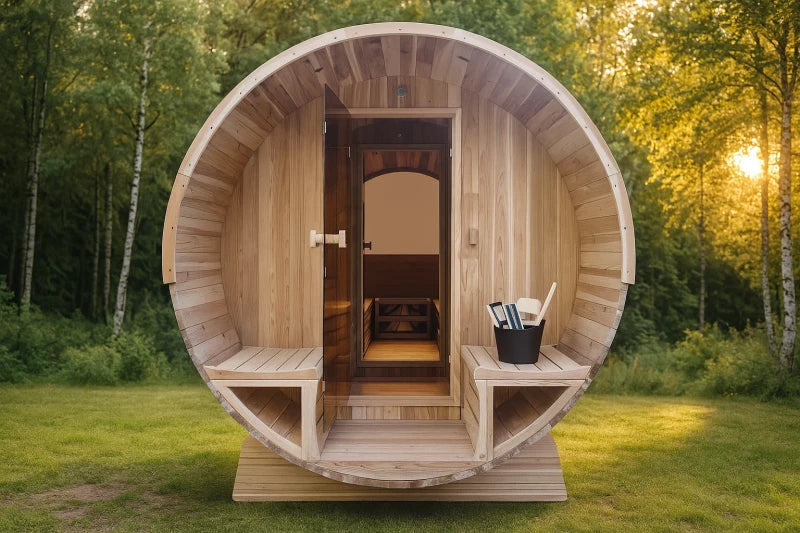
The 2-in-1 Luxury sauna with cold plunge tub lets you transition directly from the sauna to cooling down without having to construct two separate elements. This European-made unit with a minimalist design is intended for year-round use in gardens, on terraces, at holiday homes, and in commercial wellness settings.
Advantages and disadvantages of a standalone tub
The advantage of a standalone solution is the ability to plan the cooling location independently of the sauna and integrate it with the existing layout. In practice, this might mean choosing a spot closer to an existing drainage point or away from the main walkway. The final location must always comply with the installation requirements of the specific product.
The drawback is the need to coordinate two separate elements and plan the movement between them. If you position the tub merely where space happens to be left over, it may obstruct movement or complicate maintenance. A standalone installation also does not mean you can skip assessing the base and technical facilities.
Advantages and limitations of an integrated solution
The primary advantage of a 2-in-1 solution is the direct connection between the sauna and cooling down. A planning limitation can be the fact that you must find a suitable site for the entire unit rather than positioning individual parts independently. Without a specific floor plan, one cannot claim that an integrated option will always take up less space.
If you are only just choosing a sauna for your home wellness area, address both elements at the same time. This prevents a situation where, once the sauna is finished, there is no natural route to cool down or no space for subsequent quiet relaxation.
Placement in the garden and on the terrace: do not just measure the tub's footprint
A tub requires more than an empty rectangle on a plan. Allow room for safe entry and exit, operation, cleaning, and any connected equipment. Base specific clearance distances on the documentation for the chosen model, rather than estimates from photographs.
For terraces and other load-bearing structures, have a specialist verify the load of the filled tub, user, and any accessories. The dimensions of the tub alone are not enough to assess a site's suitability. The levelness of the base, managing water in the surroundings, and the ability to drain safely are equally important.
The route between the sauna, tub, and relaxation area should remain clear and straightforward. Wet feet, open doors, and another person moving past can easily expose weaknesses in a layout that looked generous on paper. Choose surrounding surfaces suited to wet conditions and keep access free of obstacles.
A practical example: adding to an existing sauna
Imagine a sauna at the end of a terrace and an empty space right next to its door. Before placing the tub there, sketch out the door swing, user access, and clearance for maintenance. A seemingly ideal proximity can be impractical if the tub blocks the only convenient walkway.
A better solution might be a location slightly further away, yet with unobstructed access and accessible technical connections. The article Terrace design: what to prepare before choosing furniture will help organise the groundwork for such a decision. The same principle of precise site assessment applies when planning a wellness area.
Cooling and filtration: preparation is not complete equipment
Cooling and filtration serve different purposes. Cooling is used to regulate the water temperature, whilst filtration captures debris depending on the system used. Cold water alone is no guarantee of hygienic safety. Care must encompass the water, the internal surface of the tub, and any connected equipment.
Distinguish between the option to add technology, prepared connections, and equipment actually included in the delivery. These terms are not interchangeable. For the spruce fibreglass variant, the option to expand with cooling and filtration is documented, not the automatic presence of both systems in every ordered configuration.
Request an unambiguous list of supplied components before ordering. Verify the compatibility of the required technology, connection requirements, service access, and operating instructions. For electrical appliances, safe connection in an environment with water belongs in the hands of a qualified professional.
Practical example: household and holiday property
In a household, care can be handled by one person who understands how it is used and continuously monitors the water condition. In a holiday home, users alternate and the operator requires a clear routine of inspections, cleaning, and handover of information. The identical appearance of a tub therefore does not mean identical operational requirements.
For commercial wellness, relevant hygiene and operational requirements must also be verified. Labelling a product as suitable for hotels or wellness centres is no substitute for the design of the entire facility or the obligations of its operator.
Maintenance of water, surfaces, and winter operation conditions
The foundation of care consists of regular water testing, cleaning the liner, operating any filtration system, and caring for the exterior cladding. The water change interval cannot be determined by a single universal figure. It depends on the frequency of use, the number of users, the installed system, and the manufacturer's instructions.
Only use products and procedures intended for the specific finish on the inner surface. Likewise, separate water care from cladding maintenance: a product suitable for one part may not be suitable for the other. Do not combine cleaning or disinfecting agents without an explicit recommendation from their manufacturer.
When not in use, a suitable cover can limit the ingress of debris, but it does not replace water maintenance. Verify the availability and compatibility of covers for the specific plunge tub. Furthermore, a standard cover cannot be considered protection against child entry without a certified safety function.
Year-round wellness does not mean operation without winter precautions
Before winter, find out whether the chosen configuration allows sub-zero operation and what conditions must be observed. Assess the entire assembly, including pipework, outlets, and connected equipment. The label outdoor or year-round alone does not provide guidance on protecting the water and technology from freezing.
If the equipment is being decommissioned, follow the specific instructions. It is not just about draining visible water from the tub; residual water in connected parts and the storage conditions of the technology can also be crucial. Without documentation, a single procedure cannot be safely recommended for all designs.
Safe use and rest as part of the whole
Cold plunging is not a competition in endurance or the lowest possible temperature. Intense cold is not suitable for everyone. In the event of cardiovascular conditions, other health issues, or uncertainty about suitability, consult a doctor beforehand. A universal time or temperature cannot be recommended without taking the individual and circumstances into account.
Enter the water in a controlled manner, do not hold your breath, and stop cooling down immediately if you experience nausea, dizziness, or chest pain. Seek medical assistance if symptoms are pronounced or persist. Beginners should not try intense cold plunging alone; children must not have unsupervised access to the tub.
After cooling down, allow space for drying off and peaceful rest. Do not plan this area as an afterthought between utility facilities and a walkway. It should be easily accessible, yet it should not obstruct people who are just entering the water or stepping out of the sauna.
Practical example: a new home wellness area
For a new project, plot out three consecutive zones: sauna, cooling, and relaxation. Then check access from the house, water drainage, and equipment operation. Only on top of this foundation should you choose the appearance of the cladding and the specific plunge tub variant. A cohesive layout is more important than matching every single surface.
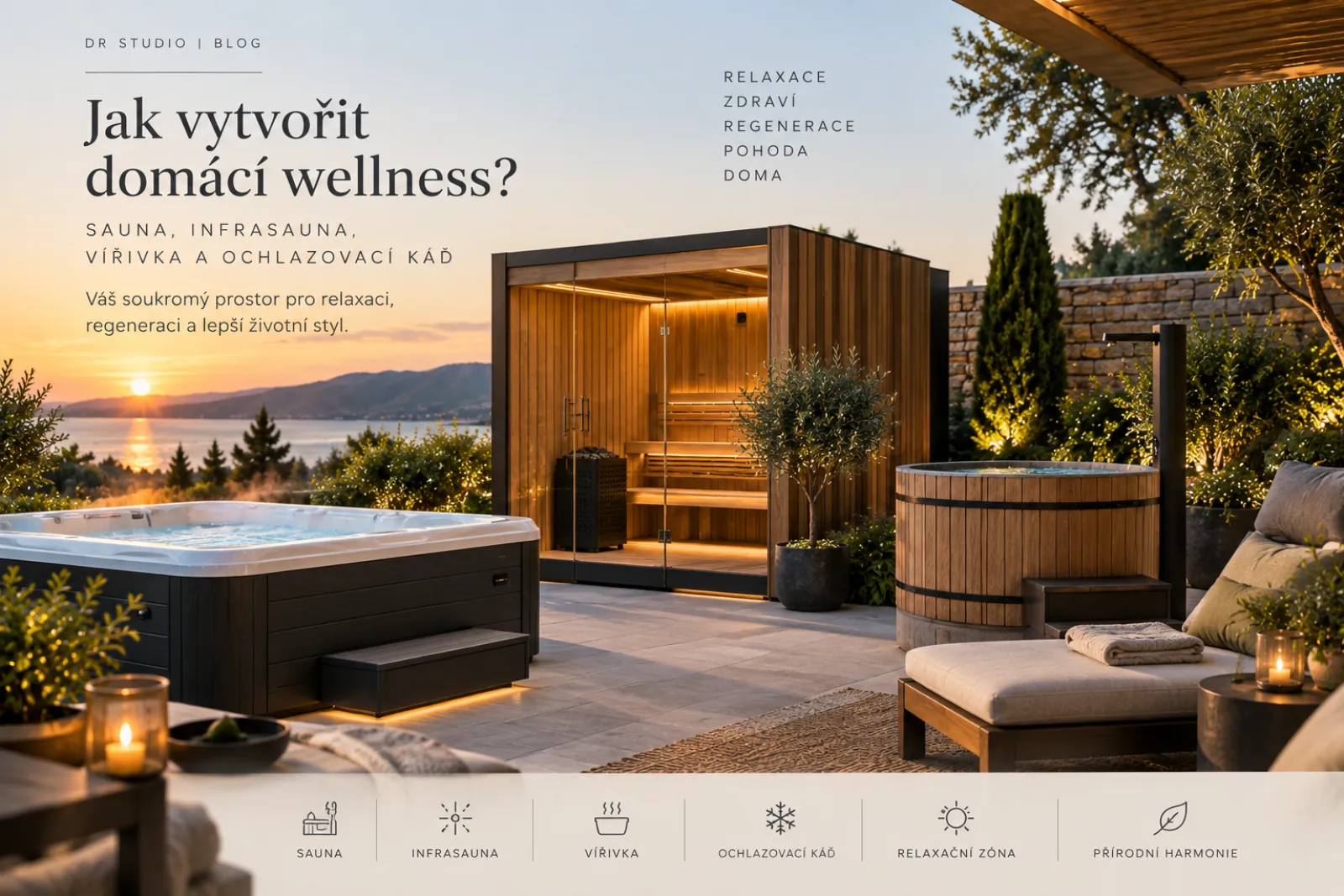
The wider connections are explored in the guide how to create a home wellness area. Therefore, browse the range of wellness equipment with a prepared floor plan and a list of operational requirements. A well-chosen plunge tub should suit your rhythm of use, not create maintenance and spatial compromises you had not planned for.
Featured products


Frequently asked questions
Is a cold plunge tub an essential part of a home sauna?
No. A plunge tub offers immersion in cold water, but it is neither a compulsory part of a sauna nor a suitable choice for everyone. Decide according to your preferred method of cooling down, health status, available space, and willingness to maintain the water.
What is the difference between the liner and cladding of a cold plunge tub?
The liner forms the inner section in contact with water, whilst the cladding determines the exterior appearance and its own maintenance requirements. Assess both parts separately and check the recommended cleaning and operating conditions for each.
Is filtration included with every cold plunge tub?
This cannot be assumed. The option to add, preparation for connection, and supplied filtration are distinct things. For the spruce fibreglass tub, the option of expanding with cooling and filtration is stated; the exact configuration must be confirmed.
How often must the water be changed in a cold plunge tub?
There is no single universal interval. Follow the instructions for the specific tub and water treatment system, the frequency of use, and the number of users. Neither cooling nor visually clear water confirms hygienic safety on its own.
Can a cold plunge tub remain in operation in winter as well?
Only under the conditions specified for the specific setup. Verify frost protection for the tub, pipework, outlets, and equipment. Being designated for year-round wellness does not mean that winter operational measures can be ignored.
Can a cold plunge tub be placed on a terrace?
It depends on the specific tub and the terrace construction. Before installation, have the load-bearing capacity verified for the filled tub, users, and accessories. Also ensure a suitable base, safe access, drainage, and space for maintenance.
When should you choose a 2-in-1 sauna with a cold plunge tub?
Consider an integrated solution when planning a new wellness area if you want a direct link between sauna sessions and cooling off without building two separate elements. The decisive factor is a suitable location for the entire setup and meeting its installation requirements.